

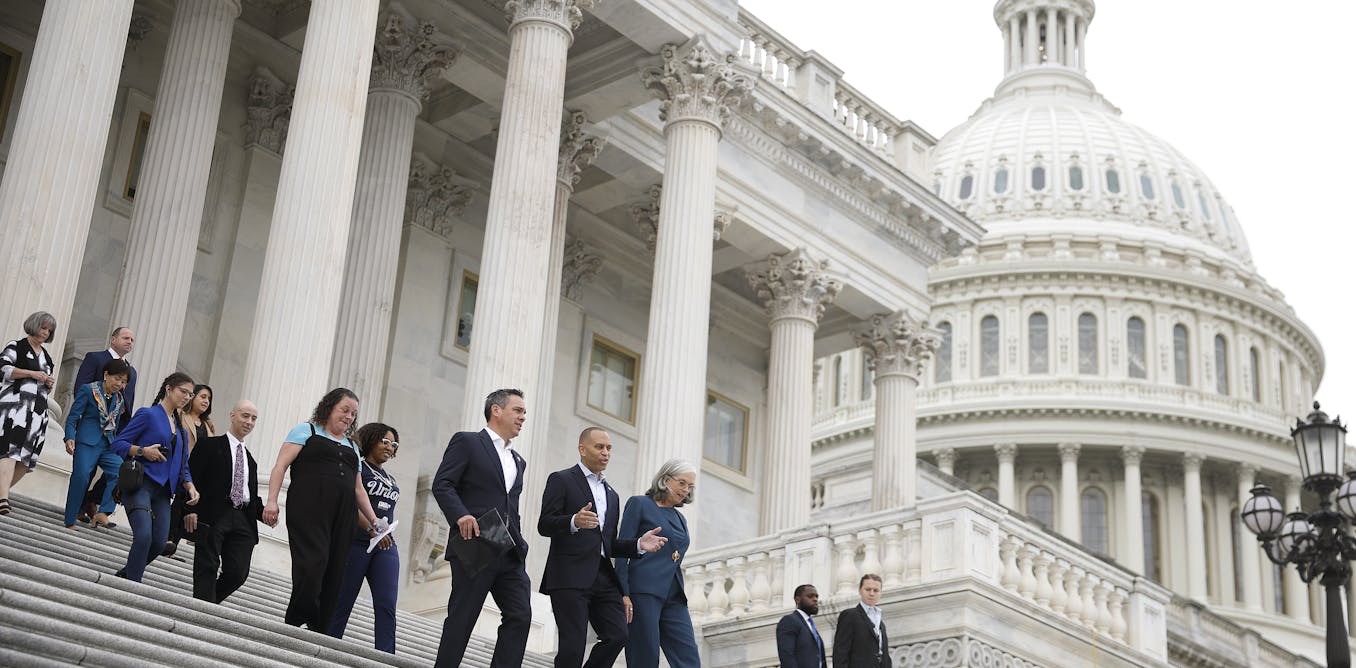
A looming government shutdown is colliding with another major crisis — the expiration of Affordable Care Act (ACA) subsidies that millions of Americans depend on for affordable health coverage. If Congress fails to renew the enhanced tax credits, millions could face soaring premiums, intensifying the budget standoff gripping Washington.
The enhanced ACA subsidies, first expanded under the American Rescue Plan, helped millions of lower- and middle-income Americans cut their monthly health insurance costs. These benefits are now set to expire at the end of 2025, unless Congress reaches an agreement. Lawmakers are split — Democrats are demanding a renewal as part of the deal to reopen government, while Republicans argue that healthcare reforms should be handled separately.
Why the ACA Subsidies Matter
Roughly 24 million Americans currently benefit from these tax credits that make ACA marketplace plans affordable. According to a recent Kaiser Family Foundation (KFF) poll, nearly 80% of Americans — across party lines — support extending the program. In some states that haven’t expanded Medicaid, losing the subsidies could mean premium hikes exceeding 50%, pushing families to drop coverage altogether.
These subsidies are particularly crucial for working-class families who fall just above Medicaid eligibility thresholds. Without federal action, insurers warn that the 2026 enrollment season could see widespread confusion and cancellations.
A Political Stalemate in Washington
The debate over ACA funding has quickly become the central obstacle to resolving the government shutdown. Democrats maintain that protecting affordable health coverage is nonnegotiable, emphasizing that allowing subsidies to lapse would be “devastating for millions.” Republicans, however, are divided — some seek to phase out the subsidies over time, while others want broader healthcare reform before any renewal.
President Donald Trump, whose administration has been involved in behind-the-scenes talks, suggested he’s open to compromise but warned against “long-term, unsustainable spending.” His comments reflect growing tension within the GOP over how to balance fiscal restraint with public pressure to maintain affordable healthcare.
What’s at Stake
If Congress fails to act before November 1, when open enrollment begins, insurance providers could raise premiums or withdraw from some markets. Analysts estimate that average costs could rise by $1,200 to $2,000 per family annually.
State officials have also begun to sound the alarm. Senator Kirsten Gillibrand (D-NY) warned that New York residents could face some of the highest premium spikes in the nation if the subsidies lapse, calling on Congress to act “before chaos hits the marketplace.”
The standoff underscores a broader challenge in American politics: balancing fiscal policy with public welfare. As negotiations drag on, the future of affordable healthcare — and the end of the government shutdown — may hinge on whether lawmakers can find common ground before millions of Americans lose critical financial support.
Watch video below :


