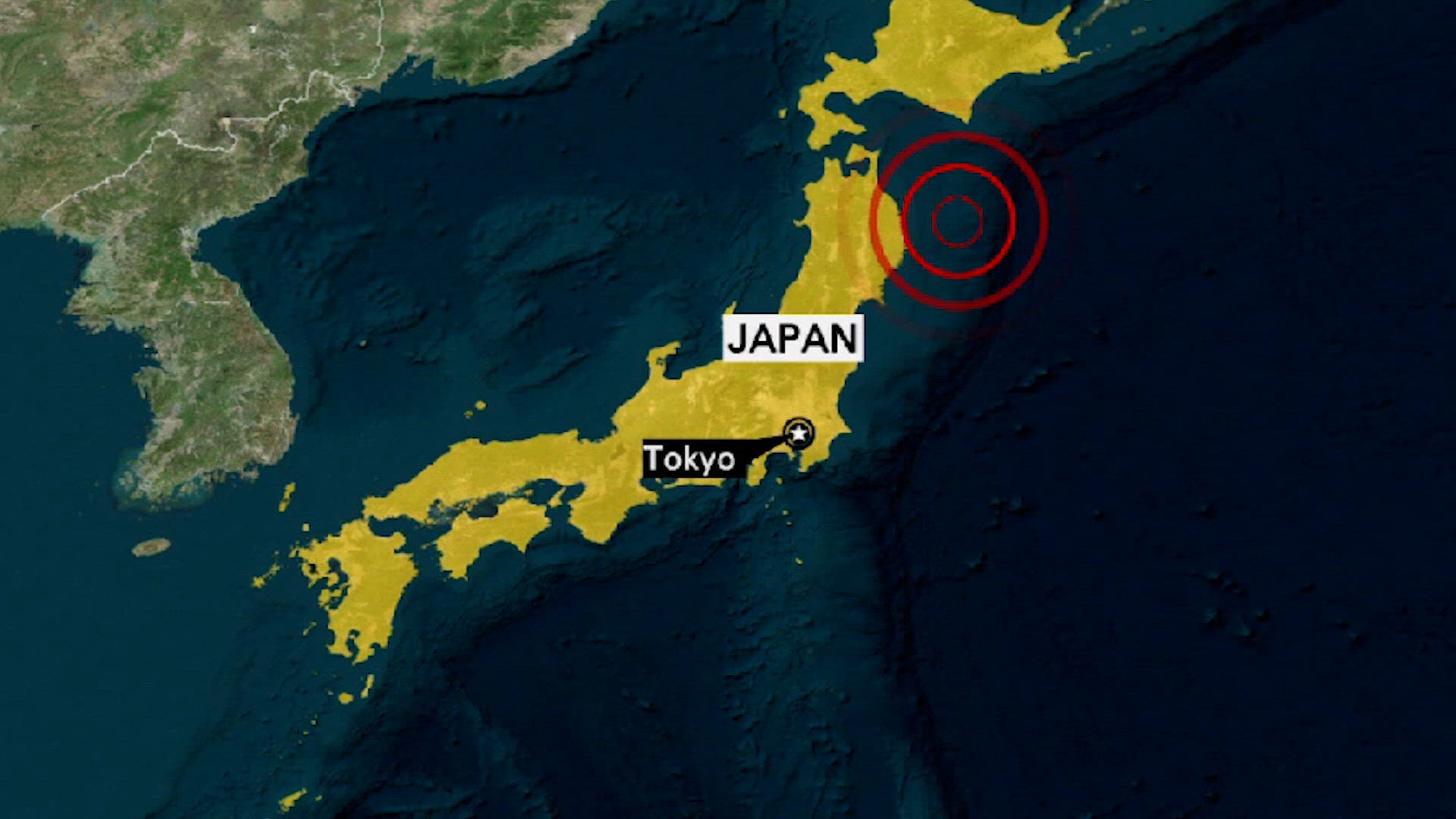
A powerful 7.7 magnitude earthquake has struck off the northern coast of Japan, triggering tsunami alerts and prompting mass evacuations across coastal regions.
The quake hit on April 20, 2026, at approximately 4:53 p.m. local time, with its epicenter located off the Sanriku coast near Iwate Prefecture. It occurred at a relatively shallow depth of around 19–20 kilometers, making the shaking more intense and widely felt, including in parts of Tokyo hundreds of kilometers away.
Tsunami warnings and evacuations
Immediately after the earthquake, authorities issued tsunami warnings, initially predicting waves of up to 3 meters along parts of the northeastern coastline. Coastal communities were urged to evacuate, with more than 170,000 residents advised to move to safer ground.
However, the actual tsunami waves were significantly smaller, reaching about 80 centimeters in some areas. As a result, warnings were later downgraded to advisories, and eventually lifted once the threat subsided.
Damage and casualties
Early reports indicate no major damage or fatalities, though a small number of injuries were recorded, mainly related to falls during evacuations. Infrastructure disruptions were limited but included temporary suspension of bullet train services and highway closures as a precaution.
Importantly, officials confirmed that no abnormalities were detected at nearby nuclear facilities, easing fears of a crisis similar to the 2011 disaster.
Rising concern over “megaquake” risk
Following the quake, the Japan Meteorological Agency issued a rare advisory warning of a slightly increased risk of a larger earthquake, sometimes referred to as a “megaquake.”
Experts estimate about a 1% chance of a magnitude 8.0 or higher earthquake occurring in the coming days—higher than the usual background risk, though still relatively low.
Authorities have urged residents to remain alert, prepare emergency supplies, and monitor official updates, especially in coastal and high-risk seismic zones.
A reminder of Japan’s seismic vulnerability
Japan sits on the Pacific “Ring of Fire,” one of the most seismically active regions in the world. While earthquakes are common, events of this magnitude serve as a stark reminder of the country’s vulnerability to natural disasters.
Although this latest earthquake did not cause catastrophic damage, its scale, combined with tsunami warnings and renewed fears of a larger quake, has placed the nation on heightened alert.
As aftershocks continue and monitoring intensifies, officials emphasize preparedness and caution—key factors that have helped Japan minimize the impact of such powerful natural events.
Watch video below :