

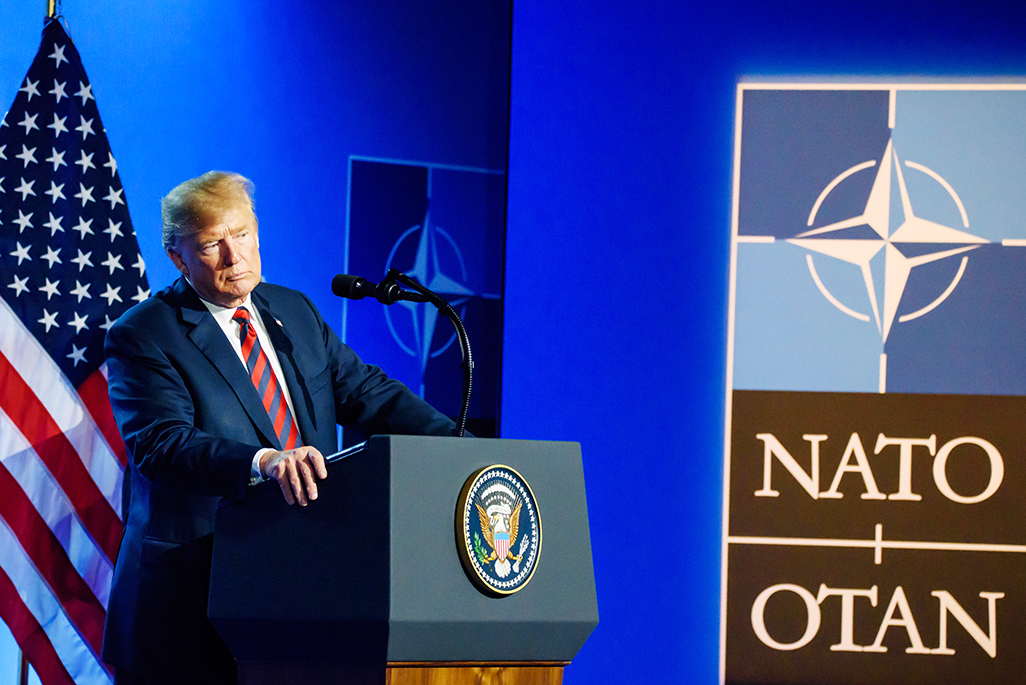
U.S. President Donald Trump has suggested the United States could reconsider its membership in NATO after expressing frustration over what he described as insufficient support from allies during the ongoing Iran war. The comments highlight growing tensions between Washington and key European partners, potentially signaling a major shift in global security dynamics.
In recent interviews and public remarks, Trump criticized NATO members for failing to provide military or logistical backing for U.S. operations in the Middle East. According to reports, several European countries declined to participate in efforts related to securing critical maritime routes and supporting strategic operations linked to the Iran conflict.
Trump described the alliance as a “paper tiger,” suggesting that NATO’s value should be reassessed if member nations are unwilling to support U.S. military objectives during major geopolitical crises. He indicated that Washington may need to “reexamine the relationship” following the conclusion of the Iran war, emphasizing that alliances must deliver tangible strategic benefits.
The Iran war, which began after escalating tensions involving nuclear security concerns and regional instability, has placed significant pressure on international partnerships. While the United States has led military operations alongside select allies, many NATO countries have avoided direct involvement, citing concerns about escalation, diplomatic consequences, and domestic political considerations.
The potential withdrawal of the United States from NATO would represent one of the most significant changes in global defense policy in decades. Founded in 1949, NATO has long served as the cornerstone of Western military cooperation, providing collective defense commitments among member states. Any move by the U.S. to distance itself from the alliance could alter geopolitical balances and influence global security strategies.
Market analysts and political experts warn that uncertainty surrounding the future of NATO may contribute to increased volatility in global markets, particularly energy prices and defense-related sectors. The Iran conflict has already affected oil supply routes through the Strait of Hormuz, a critical channel for global energy transportation.
Despite the strong rhetoric, experts note that withdrawing from NATO would involve complex legal and political processes, including cooperation with Congress and consultation with international partners. Historically, the alliance has played a central role in shaping Western security strategy, and any structural change would likely have long-term implications for global diplomacy and military coordination.
European leaders have reaffirmed their commitment to NATO, emphasizing the alliance’s continued importance in maintaining international stability. Some officials argue that cooperation remains essential for addressing shared threats, including terrorism, cyber risks, and regional conflicts.
As the Iran war continues to influence international relations, Trump’s remarks underscore a widening divide between the United States and certain allied nations. Observers suggest that the coming weeks could prove critical in determining whether diplomatic solutions can preserve long-standing partnerships or whether strategic priorities will shift toward a more independent U.S. defense posture.
The evolving situation reflects broader questions about the future of multinational alliances and how global powers respond to rapidly changing security challenges in an increasingly complex geopolitical environment.
Watch video below :


