

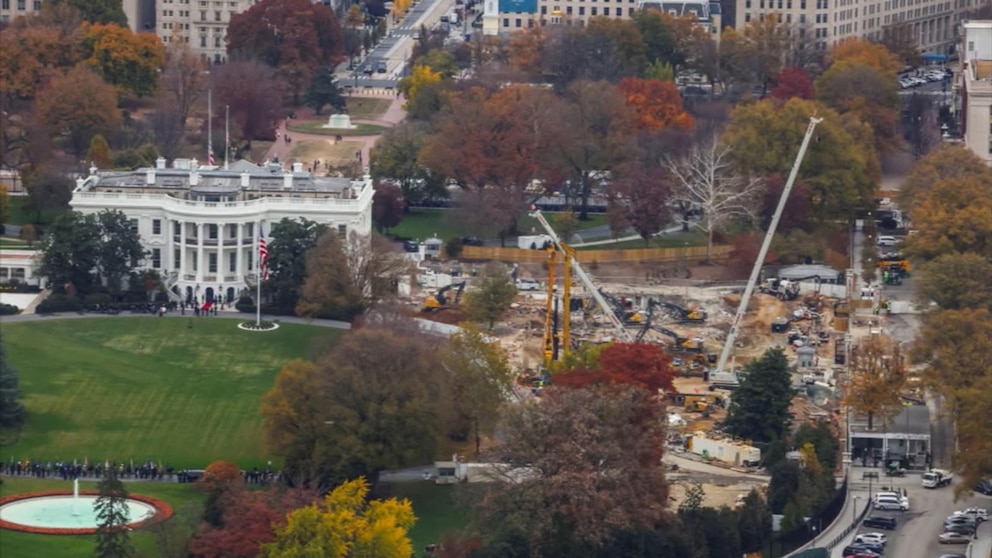
A federal judge has blocked a proposed construction project to add a new ballroom to the White House, ruling that the president does not personally own the historic property and therefore cannot unilaterally authorize major structural changes. The decision has drawn national attention, raising important constitutional and legal questions about presidential authority and the management of federally owned landmarks.
The case emerged after plans were announced to expand the White House’s event facilities with a large ballroom designed to host official state functions, diplomatic receptions, and ceremonial gatherings. Supporters of the project argued that the new ballroom would modernize the historic building’s capacity to accommodate large-scale events, reducing reliance on temporary structures such as tents that have often been used for major gatherings.
However, opponents raised concerns about legal authority, preservation standards, and the constitutional limits of presidential power. The lawsuit ultimately centered on whether a sitting president has the right to independently approve structural modifications to a federally owned national landmark.
In the ruling, the judge emphasized that the White House is not private property belonging to the president, but rather a public building owned by the federal government and held in trust for the American people. As such, significant alterations typically require approval through established legal and administrative procedures, including oversight from Congress and relevant preservation authorities.
Legal experts note that the White House is both an official residence and a historically protected site, meaning any proposed structural changes must comply with federal preservation laws and architectural review processes. The decision reinforces the long-standing principle that the presidency is a public office with defined legal limits, rather than personal ownership of government property.
The ruling does not necessarily prevent future renovation or expansion projects at the White House, but it requires that any such proposals follow the appropriate legal channels. This may include congressional funding approval, consultation with historical preservation agencies, and compliance with federal planning regulations.
Presidential administrations have historically made updates to the White House, including security upgrades, technological modernization, and restoration efforts designed to preserve the building’s historical integrity. However, large-scale structural additions are relatively rare and often subject to significant public and institutional scrutiny.
Observers say the case highlights the broader constitutional principle of checks and balances, demonstrating how the judicial branch can review executive decisions involving federal property. The decision also underscores the importance of maintaining the White House as both a functional workplace and a symbol of national heritage.
As discussions continue, the future of the ballroom proposal remains uncertain. Any revised plan would likely need to demonstrate compliance with preservation requirements, budget approval procedures, and architectural review standards before moving forward.
The case serves as a reminder that even the most powerful political office in the United States operates within a legal framework designed to ensure accountability and protect nationally significant landmarks for future generations.
Watch video below :