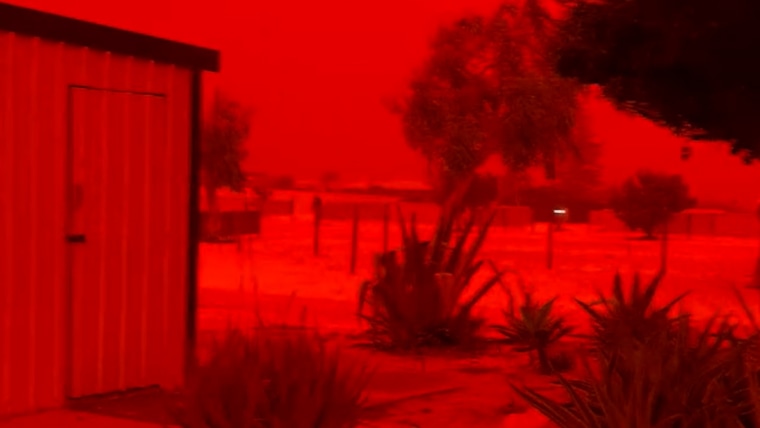
Residents across parts of northern Australia witnessed dramatic bright red skies as a powerful tropical cyclone approached the coastline, creating striking scenes that quickly spread across social media. Meteorologists say the unusual sky color was caused by a combination of intense storm activity, airborne dust particles, and shifting atmospheric conditions as the cyclone moved closer to land.
According to weather experts, tropical cyclones can significantly alter the appearance of the sky, particularly during sunrise or sunset when sunlight interacts with high concentrations of moisture and particles in the atmosphere. In this case, strong winds lifted large amounts of dust and aerosols into the air, scattering shorter blue wavelengths of light while allowing red and orange hues to dominate the sky.
Tropical Cyclone systems are characterized by strong winds, heavy rainfall, and storm surges capable of causing flooding and infrastructure damage. Authorities issued warnings urging residents in affected coastal regions to prepare for potential power outages, transport disruptions, and hazardous conditions as the storm approached.
Emergency services reported increased demand for information as communities sought updates on evacuation guidance and safety precautions. Local governments encouraged residents to secure outdoor property, stock essential supplies, and monitor official forecasts. Some coastal areas experienced strong winds even before the cyclone made landfall, contributing to the dramatic atmospheric effects observed in the sky.
Meteorologists explained that red skies can sometimes indicate high concentrations of particles in the air, including dust, smoke, or sea salt carried by strong winds. In tropical environments, storms often interact with dry inland regions, lifting fine particles that influence how sunlight is refracted through the atmosphere. Combined with thick storm clouds, these conditions can create unusually vivid colors.
Scientists also note that extreme weather patterns have become more closely monitored as climate variability influences storm intensity and rainfall patterns. While individual weather events cannot be attributed to a single cause, researchers continue studying long-term trends related to tropical cyclone behavior and atmospheric composition.
Communities in northern Australia are accustomed to seasonal cyclone risks, particularly during warmer months when ocean temperatures provide energy for storm development. Authorities emphasize the importance of preparedness and early response measures to minimize potential damage and ensure public safety.
Images of the red sky quickly circulated online, drawing attention from weather observers worldwide. Many described the scene as both visually stunning and concerning, reflecting the powerful forces associated with severe weather systems.
Officials continue to monitor the cyclone’s path as it moves inland, with forecasts predicting heavy rainfall across multiple regions. Emergency response teams remain on standby to assist communities if flooding or structural damage occurs.
The striking red skies serve as a reminder of how atmospheric conditions can change rapidly during major storms. Experts advise residents in cyclone-prone areas to remain alert to weather updates and follow guidance from local authorities to reduce risks during severe weather events.
As the tropical cyclone makes landfall, meteorologists will continue analyzing how environmental factors contributed to the unusual sky coloration, offering insights into the complex interactions between weather systems and atmospheric particles.
Watch video below :