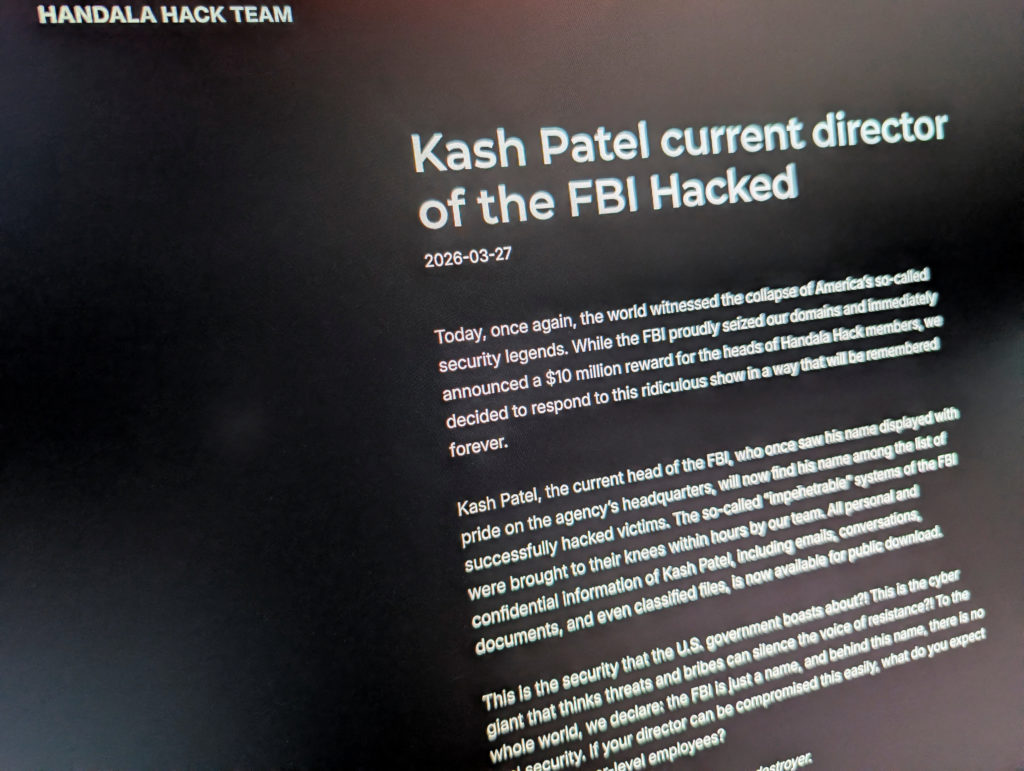
An Iran-linked cyber group has claimed responsibility for hacking into the personal email account of Kash Patel, the current Director of the Federal Bureau of Investigation (FBI). The alleged breach has intensified concerns over cybersecurity threats targeting senior U.S. officials, particularly amid heightened geopolitical tensions between the United States and Iran.
According to cybersecurity analysts, the group behind the claim is believed to be associated with pro-Iran hacking networks known for targeting Western political figures and institutions. The hackers reportedly gained access to personal communications, archived emails, and private documents stored in Patel’s personal account. Early assessments indicate that the materials are primarily non-classified, but the incident still highlights vulnerabilities that could potentially be exploited for intelligence gathering or influence operations.
Experts note that cyberattacks against high-profile individuals are becoming increasingly common as digital communication plays a larger role in government operations. Even when official government systems are not directly compromised, personal accounts can provide valuable insights into professional networks, travel patterns, and communication habits. Such information may be used to support broader cyber espionage strategies or disinformation campaigns.
Security specialists emphasize that personal email platforms often lack the advanced protection protocols used in secure government networks, making them more attractive targets for sophisticated hacking groups. The incident involving Patel demonstrates how cyber actors may attempt to bypass institutional defenses by focusing on individual vulnerabilities instead of attacking protected federal systems directly.
Government officials have acknowledged the situation and confirmed that relevant authorities are reviewing the claim to determine the scope of the breach and assess any potential national security risks. Initial findings suggest there is currently no indication that classified FBI systems or sensitive intelligence databases were compromised. However, investigations are ongoing as cybersecurity teams evaluate the authenticity of the leaked material and identify any potential security implications.
The alleged attack reflects broader patterns of cyber activity linked to geopolitical rivalry, where digital operations are increasingly used as tools of strategic competition. Analysts observe that cyber operations often aim to create public attention, test security defenses, or gather intelligence that could be used in future diplomatic or political negotiations.
As cyber threats continue to evolve, the incident highlights the importance of strong digital security practices for public officials and organizations handling sensitive information. Experts recommend multi-factor authentication, encrypted communication tools, and regular security monitoring as essential measures to reduce exposure to cyber risks.
The situation underscores the growing significance of cybersecurity in modern international relations, where digital infrastructure plays a critical role in protecting government communications, safeguarding national interests, and maintaining public trust in institutional security systems.
Watch video below :