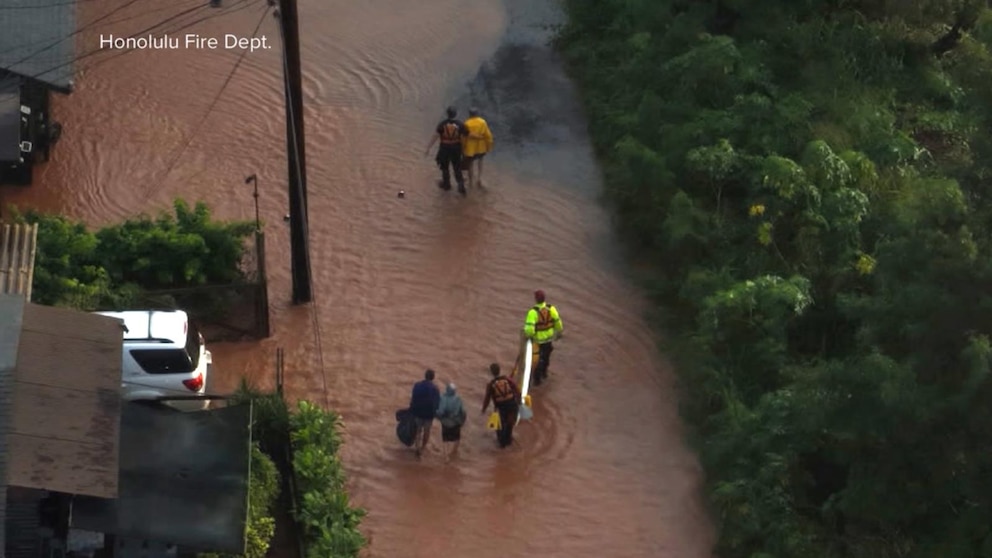
Hundreds of residents have been rescued after extreme flooding swept across parts of Hawaii, prompting large-scale emergency response operations and raising concerns about the growing impact of severe weather events in the Pacific region. Authorities confirmed that rescue teams worked continuously to evacuate individuals trapped in homes, vehicles, and low-lying neighborhoods as heavy rainfall caused rivers and drainage systems to overflow.
Emergency services across Hawaii reported rapidly rising water levels that inundated streets, disrupted transportation, and forced temporary road closures. First responders, including firefighters, coast guard personnel, and local volunteers, coordinated rescue missions using boats and specialized equipment to reach affected communities.
Meteorologists indicated that the severe flooding was triggered by an intense storm system that brought prolonged heavy rainfall across multiple islands. Some areas experienced rainfall totals far above seasonal averages, overwhelming flood-control infrastructure and increasing the risk of landslides in mountainous regions.
Local authorities issued flash flood warnings and urged residents to avoid travel in affected areas as conditions remained hazardous. Officials emphasized the importance of staying informed through weather alerts and following evacuation guidance where necessary. Several schools and public offices were temporarily closed to ensure public safety.
The flooding caused significant disruption to transportation networks, including highway closures and flight delays. Emergency management teams worked to assess damage to infrastructure such as bridges, drainage systems, and public utilities. In some areas, power outages were reported after floodwaters affected electrical systems.
Climate experts note that extreme weather events have become more frequent in many coastal and island regions, increasing the likelihood of flooding, storm surges, and environmental damage. While individual storms cannot always be directly attributed to long-term climate patterns, researchers continue to study how changing ocean temperatures may influence storm intensity and rainfall levels.
Rescue operations remained ongoing as emergency crews conducted search efforts to ensure that no residents remained stranded. Authorities also began distributing emergency supplies, including drinking water, food, and temporary shelter assistance for families displaced by flood damage.
Community organizations played an important role in supporting response efforts by providing resources and coordinating assistance for affected residents. Volunteers assisted in clearing debris, transporting supplies, and helping vulnerable populations relocate to safer areas.
Officials advised residents to remain cautious even after water levels begin to recede, as floodwaters can weaken road surfaces, damage building foundations, and conceal hazardous debris. Health experts also warned of potential contamination risks in standing water, recommending protective measures during cleanup activities.
The full extent of damage is still being evaluated, but early reports suggest that recovery efforts may take weeks in heavily impacted areas. Authorities continue monitoring weather conditions as additional rainfall remains possible in some regions.
The extreme flooding in Hawaii highlights the importance of disaster preparedness, resilient infrastructure, and effective emergency coordination in minimizing risks to communities. As recovery operations continue, government agencies and local organizations are expected to work together to support rebuilding efforts and reduce vulnerability to future weather-related disasters.
Watch video below :