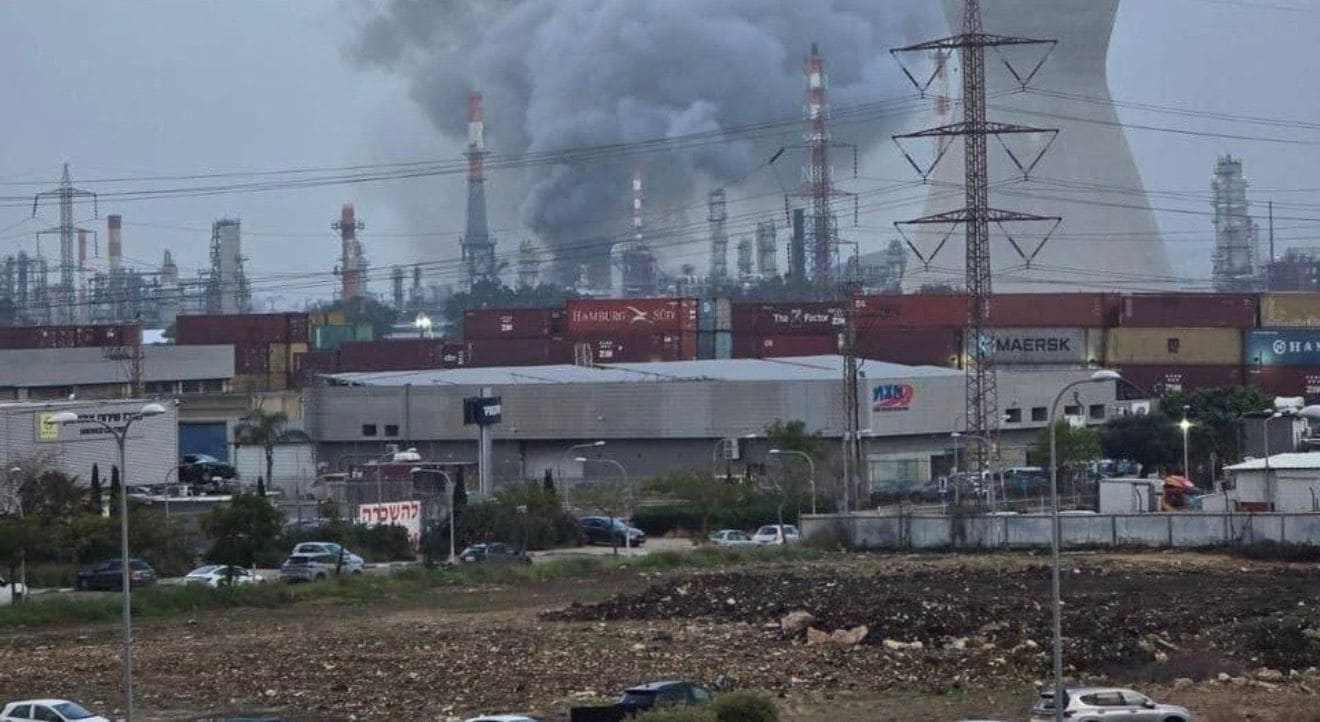
A sharp escalation in the Middle East conflict unfolded after an Iranian ballistic missile struck a major oil facility in Haifa, intensifying fears of a broader regional crisis and disrupting critical energy infrastructure.
Initial reports indicate that the missile impacted the Haifa oil refinery—one of Israel’s most important fuel processing centers. The strike triggered a large fire, sending thick smoke into the sky and prompting emergency services to respond immediately. Authorities quickly secured the area, evacuating nearby zones as a safety measure while firefighting teams worked to contain the damage.
This attack marks one of the most significant direct hits on Israeli energy infrastructure in the current conflict. Analysts say the targeting of a refinery is not accidental—it reflects a calculated strategy aimed at weakening Israel’s domestic fuel supply and creating economic pressure.
Israeli officials strongly condemned the strike, labeling it a deliberate attack on civilian-linked infrastructure. According to preliminary military assessments, air defense systems were deployed but failed to intercept the incoming missile in time, highlighting the growing complexity and intensity of incoming threats.
The incident comes amid an ongoing cycle of escalation between Iran and Israel. In recent weeks, Israeli forces have conducted strikes against Iranian military assets and nuclear-related facilities. Tehran has responded with a series of missile and drone attacks, expanding the battlefield beyond traditional military targets to include economic and strategic infrastructure.
Global energy markets reacted swiftly to the news. Oil prices climbed as investors grew concerned about supply disruptions in one of the world’s most critical energy regions. The Middle East plays a central role in global oil production, and any instability—especially involving refineries or export routes—can have immediate worldwide consequences.
Security experts warn that the conflict is entering a more dangerous phase. The focus is shifting from purely military engagements to attacks on infrastructure with global economic importance. Such developments significantly increase the risk of a prolonged and wider regional war.
The situation is further complicated by the strategic importance of the Strait of Hormuz, located nearby. This narrow waterway handles a large portion of the world’s oil shipments, and any escalation affecting it could disrupt global energy supplies on a massive scale.
At present, the full extent of the damage and any potential casualties remains unclear. Israeli authorities have launched a detailed investigation while raising the national alert level. Additional defensive measures are expected as officials prepare for the possibility of further attacks.
International reactions have been swift, with multiple governments urging restraint and calling for de-escalation. However, with both sides continuing military operations, the likelihood of immediate calm appears low.
The missile strike on Haifa’s refinery highlights how rapidly the conflict is evolving and underscores the vulnerability of critical infrastructure in modern warfare. As tensions continue to rise, the coming days will be crucial in determining whether the situation stabilizes—or spirals into a larger regional confrontation.
Watch video below :