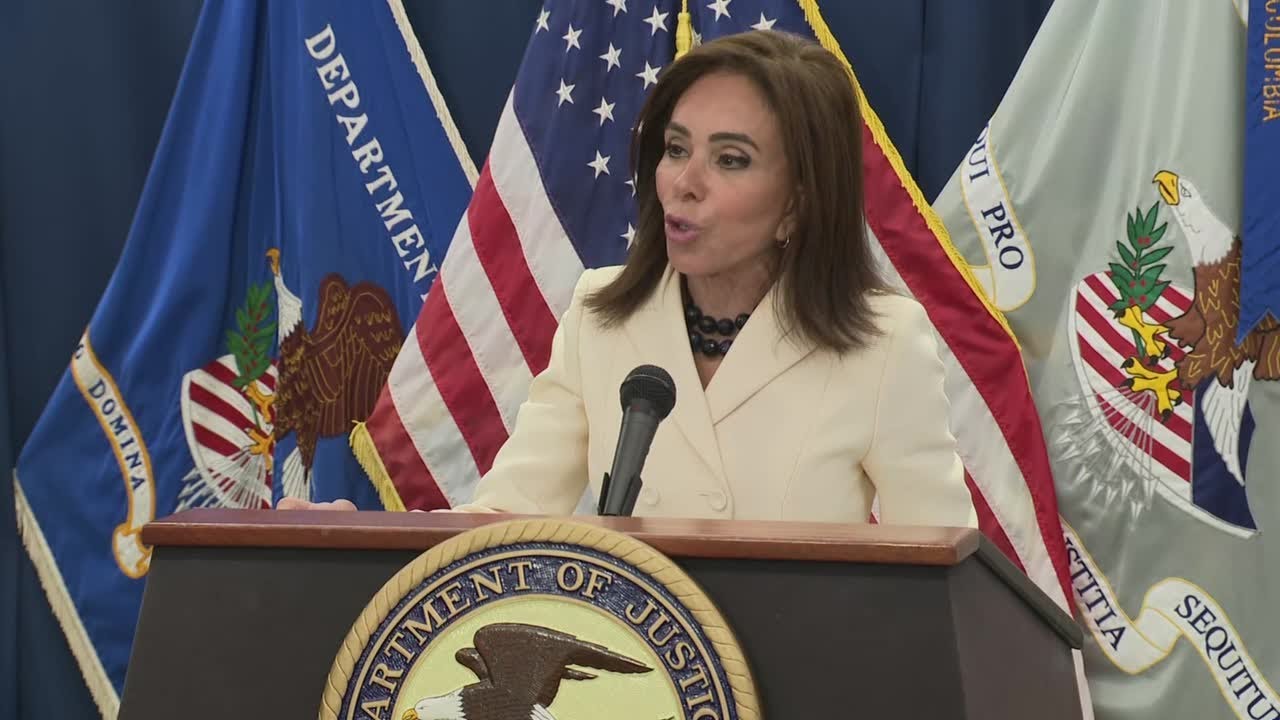
A growing legal and political controversy is unfolding in the United States after Jeanine Pirro was asked to explain the motivation behind a Justice Department inquiry targeting Jerome Powell. The investigation has drawn national attention after a federal judge halted key subpoenas that prosecutors hoped would advance the case.
The inquiry, reportedly launched by the Department of Justice, focuses on statements Powell made to Congress regarding a large renovation project at the Federal Reserve’s headquarters in Washington, D.C. Investigators were attempting to determine whether Powell may have provided misleading information about the cost and scope of the project.
Questions Over Federal Reserve Renovation Costs
The renovation project at the Federal Reserve’s main building has reportedly seen significant cost increases over time. Early estimates placed the price at around $1.9 billion, but later projections suggested the total cost could climb well above $2 billion.
Prosecutors sought internal documents and testimony from Federal Reserve officials through grand jury subpoenas. The goal was to determine whether Powell knowingly misrepresented financial details while speaking before lawmakers.
Supporters of the investigation argued that if inaccurate information was provided to Congress, it could raise serious legal questions. They said the inquiry was necessary to ensure transparency and accountability within one of the most powerful financial institutions in the United States.
Federal Judge Blocks Subpoenas
However, the investigation faced a major setback when James Boasberg, chief judge of the U.S. District Court in Washington, ruled that the subpoenas should be blocked.
In his decision, the judge stated that prosecutors had not presented sufficient evidence of criminal wrongdoing to justify forcing the Federal Reserve to turn over internal records. The ruling effectively paused the investigation and prevented prosecutors from accessing key materials they hoped to review.
The decision has sparked a broader debate about the limits of federal investigations involving the central bank.
Political Tensions Surrounding the Federal Reserve
The dispute is unfolding against a backdrop of ongoing political tensions surrounding the Federal Reserve and its leadership. The central bank, which is responsible for setting U.S. monetary policy and managing interest rates, has traditionally operated independently from political influence.
Critics of the investigation argue that legal pressure on the Federal Reserve could undermine confidence in the institution and potentially affect financial markets. Supporters, however, say no public official should be immune from scrutiny.
The controversy has also renewed focus on the leadership of the Federal Reserve and the broader relationship between the government and the country’s central bank.
Investigation May Continue
Despite the judge’s ruling, the Justice Department is expected to appeal the decision in an effort to revive the investigation. If the appeal moves forward, the case could become a significant legal battle that tests the boundaries between federal prosecutors and the independence of the central bank.
Meanwhile, Powell has denied any wrongdoing and continues to lead the Federal Reserve, as analysts and lawmakers closely watch how the dispute develops.
With questions still surrounding the motive behind the probe and the future of the investigation uncertain, the situation remains a major topic in U.S. political and financial circles.
Watch video below :