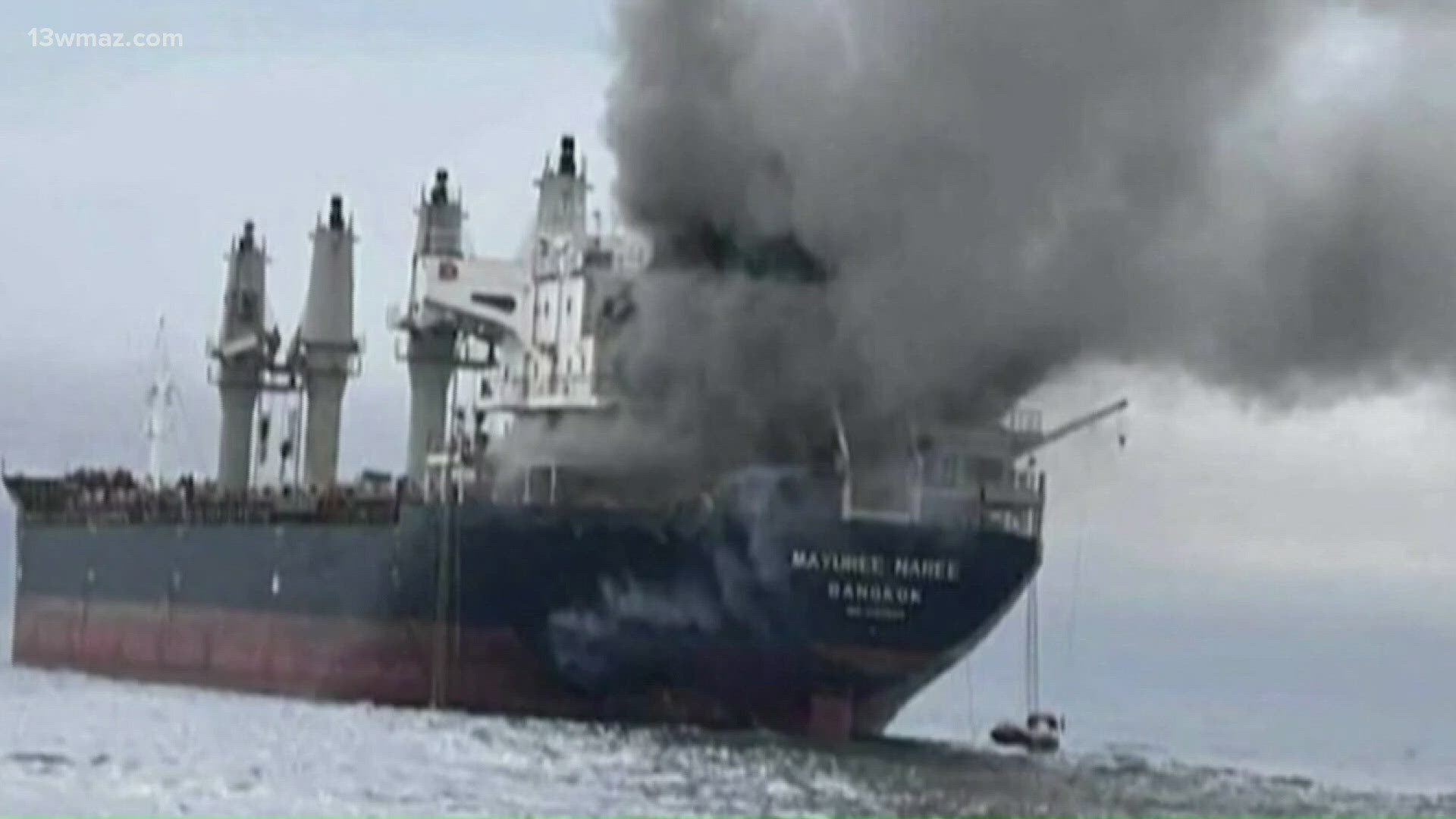
Tensions in the Middle East escalated sharply after Iran reportedly attacked multiple commercial vessels in the Strait of Hormuz, one of the world’s most critical maritime trade routes. The incident has raised serious concerns about global shipping security, oil supply disruptions, and potential military escalation in the Persian Gulf.
According to early maritime security reports, at least three commercial ships were targeted while transiting the strategic waterway connecting the Persian Gulf to the Gulf of Oman. The Strait of Hormuz is widely known as a vital global energy corridor through which a significant portion of the world’s oil shipments pass every day.
One of the vessels reportedly struck during the attack was the MV Mayuree Naree, a Thai-flagged bulk carrier. The ship suffered heavy damage and caught fire after being hit by what analysts believe may have been a drone or missile strike. Emergency response teams were deployed quickly, and most crew members were evacuated safely, although several individuals were initially reported missing.
Two additional vessels also reported damage during the incident, including the ONE Majesty and the Star Gwyneth. Maritime tracking data indicated that the ships were traveling through international shipping lanes when the attacks occurred.
The Strait of Hormuz is considered one of the most strategically important waterways in the world. Approximately 20% of global oil shipments move through this narrow passage every day, making it a critical artery for international energy markets. Any disruption in this region can immediately impact oil prices, shipping insurance costs, and global economic stability.
Security analysts believe the attacks could be linked to rising tensions between Iran and several Western nations, including the United States, amid ongoing geopolitical disputes in the Middle East. While Iranian authorities have not officially confirmed responsibility for the attacks, regional military observers note that the weapons used appear consistent with systems previously deployed by Iranian forces or affiliated groups.
Following the incident, several international shipping companies issued warnings to vessels operating in the region. Some cargo ships have reportedly begun rerouting or delaying their passage through the Strait of Hormuz to avoid potential security risks.
Global energy markets reacted quickly to the news. Analysts warn that continued instability in the region could trigger higher oil prices, disrupt global supply chains, and increase insurance premiums for commercial shipping operating in the Persian Gulf.
Military forces from multiple countries are now closely monitoring maritime activity in the area. Naval patrols have increased, and international coalitions are reportedly working to ensure the safety of merchant vessels navigating through this critical shipping lane.
The attack highlights how fragile global maritime security can be when geopolitical tensions escalate near key trade routes. As investigations continue, the international community is calling for restraint and diplomatic solutions to prevent further escalation that could threaten global commerce and energy supplies.
Watch video below :