

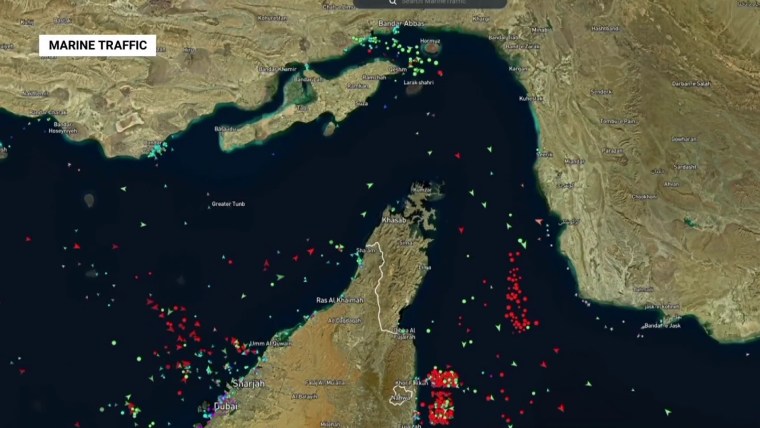
Global energy markets are feeling renewed pressure as commercial shipping slows through the Strait of Hormuz, one of the world’s most critical oil transit chokepoints. The disruption, linked to escalating regional tensions involving Iran and the United States, is already impacting crude oil prices and driving gasoline costs higher in several countries.
The Strait of Hormuz connects the Persian Gulf to the Gulf of Oman and the Arabian Sea, serving as a vital artery for global energy supply. Roughly one-fifth of the world’s oil consumption passes through the narrow waterway each day. Even minor disruptions in traffic can create ripple effects across international energy markets.
In recent days, shipping companies have reportedly reduced vessel speeds, rerouted cargo, or delayed departures due to heightened security concerns. Insurance premiums for tankers transiting the region have also climbed sharply, increasing operational costs that are often passed along the supply chain. Industry analysts warn that prolonged slowdowns could tighten global oil supplies and increase volatility in fuel markets.
Energy traders responded quickly to the uncertainty, pushing crude benchmarks higher on fears of supply constraints. As oil prices rise, gasoline prices typically follow — affecting consumers at the pump. In the United States and parts of Europe, early data already shows modest but noticeable increases in retail fuel costs.
Market experts note that the impact extends beyond gasoline. Liquefied natural gas (LNG) shipments also rely heavily on transit through the Strait of Hormuz. Any bottleneck could influence global natural gas prices, particularly in Asia and Europe, where demand remains strong.
While the waterway remains open, maritime authorities have heightened patrols and security coordination. The U.S. Navy and allied forces are closely monitoring the situation to ensure freedom of navigation and deter potential threats to commercial vessels.
Economists caution that sustained instability in the region could have broader macroeconomic implications. Higher fuel prices can contribute to inflationary pressures, raise transportation costs, and weigh on consumer spending. For energy-importing nations, the financial burden can be especially significant.
Iran has previously signaled that it could disrupt traffic in the Strait of Hormuz in response to geopolitical pressure, though doing so would carry major economic and diplomatic consequences. Analysts emphasize that even without a full closure, uncertainty alone can move markets.
For now, global energy stakeholders are watching closely. If tensions ease, shipping volumes could normalize and price pressures may stabilize. However, if security risks intensify or direct confrontations occur near the strait, the consequences for oil markets and global gas prices could become more pronounced.
As one of the most strategically important waterways in the world, the Strait of Hormuz remains a barometer for geopolitical risk — and its current slowdown is a reminder of how closely global energy stability is tied to regional security dynamics.
Watch video below :