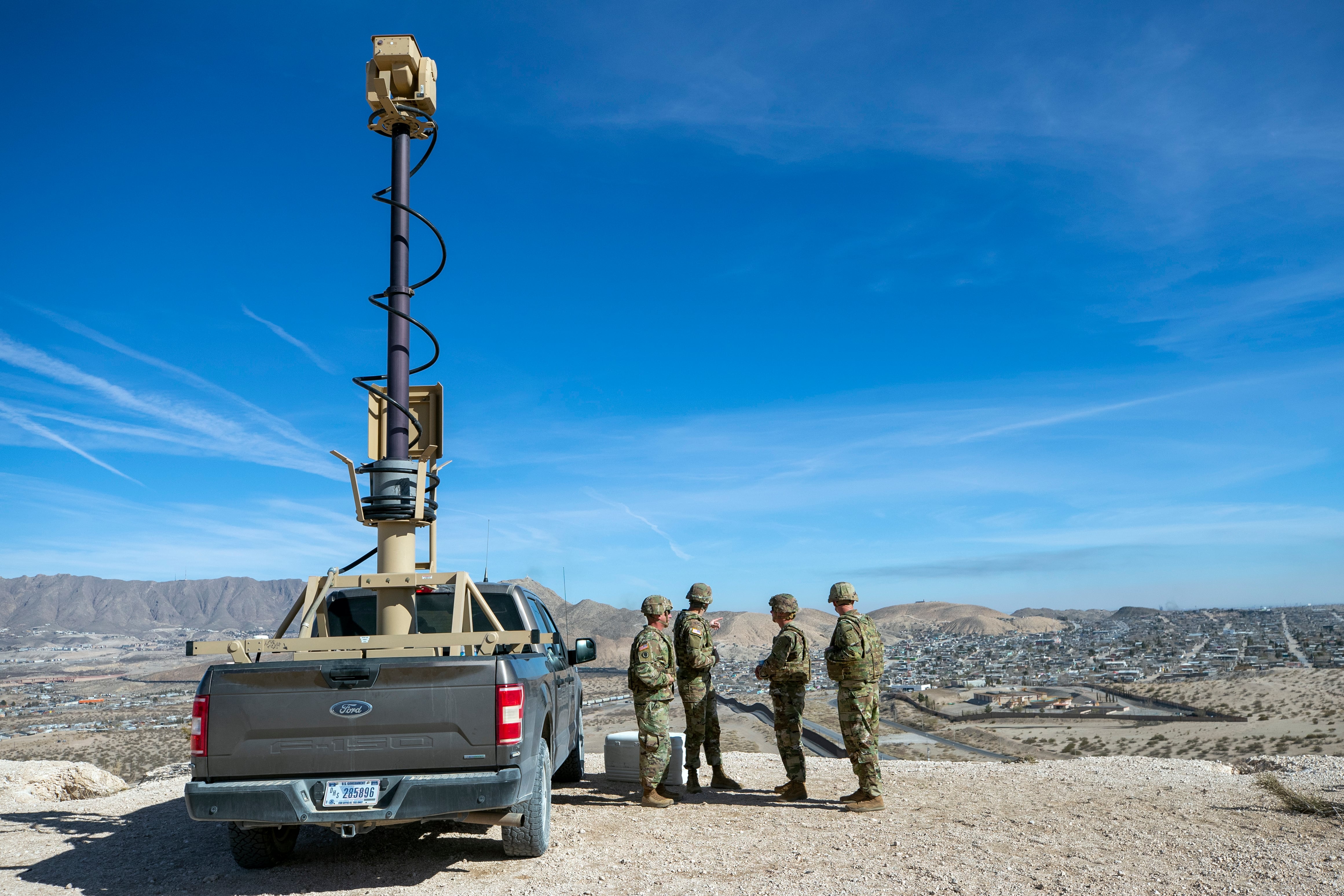
Federal officials confirmed that the United States Armed Forces used a laser-based defense system to disable and shoot down a drone operating near the southern border in Texas. The aircraft was reportedly linked to border surveillance operations, prompting immediate scrutiny over coordination and airspace management.
According to initial reports, the drone was operating within restricted or sensitive airspace when it was targeted by a ground-based laser defense platform. Authorities stated that the system was deployed in accordance with established security protocols designed to neutralize unauthorized aerial threats.
Officials emphasized that the laser technology is intended as a precision tool capable of disabling unmanned aircraft without causing widespread collateral damage. Directed-energy systems have increasingly become part of the U.S. military’s layered defense strategy, particularly in areas where drone activity has surged.
The drone was reportedly associated with border monitoring operations, though agencies are still reviewing the chain of communication that led to the incident. Representatives from United States Border Patrol indicated they are cooperating with the Department of Defense to clarify operational procedures and ensure similar incidents are avoided in the future.
Defense analysts note that drone usage along the southern border has expanded significantly in recent years, with federal and state agencies relying on unmanned systems for surveillance, reconnaissance, and situational awareness. However, overlapping jurisdictions between military installations and civilian enforcement agencies can create complex airspace coordination challenges.
The incident has prompted questions from lawmakers regarding interagency communication and the rules governing domestic deployment of advanced military technology. While no injuries were reported, the event highlights the evolving role of directed-energy weapons within U.S. defense infrastructure.
Laser defense systems are designed to counter small, fast-moving aerial threats such as drones by overheating or disabling key components. Compared to traditional missile interceptors, these systems offer rapid response times and reduced cost per engagement. However, their use within U.S. territory—especially involving government-operated drones—can generate legal and operational scrutiny.
Federal authorities have stated that a joint review is underway to determine whether the drone’s flight plan was properly coordinated and whether established notification procedures were followed. Officials stressed that national security remains the top priority while acknowledging the need for improved communication between agencies.
As drone technology continues to proliferate, incidents like this underscore the importance of clear operational boundaries and real-time coordination among federal entities. The outcome of the ongoing review could lead to updated airspace protocols along the Texas border and beyond.
Watch video below :