

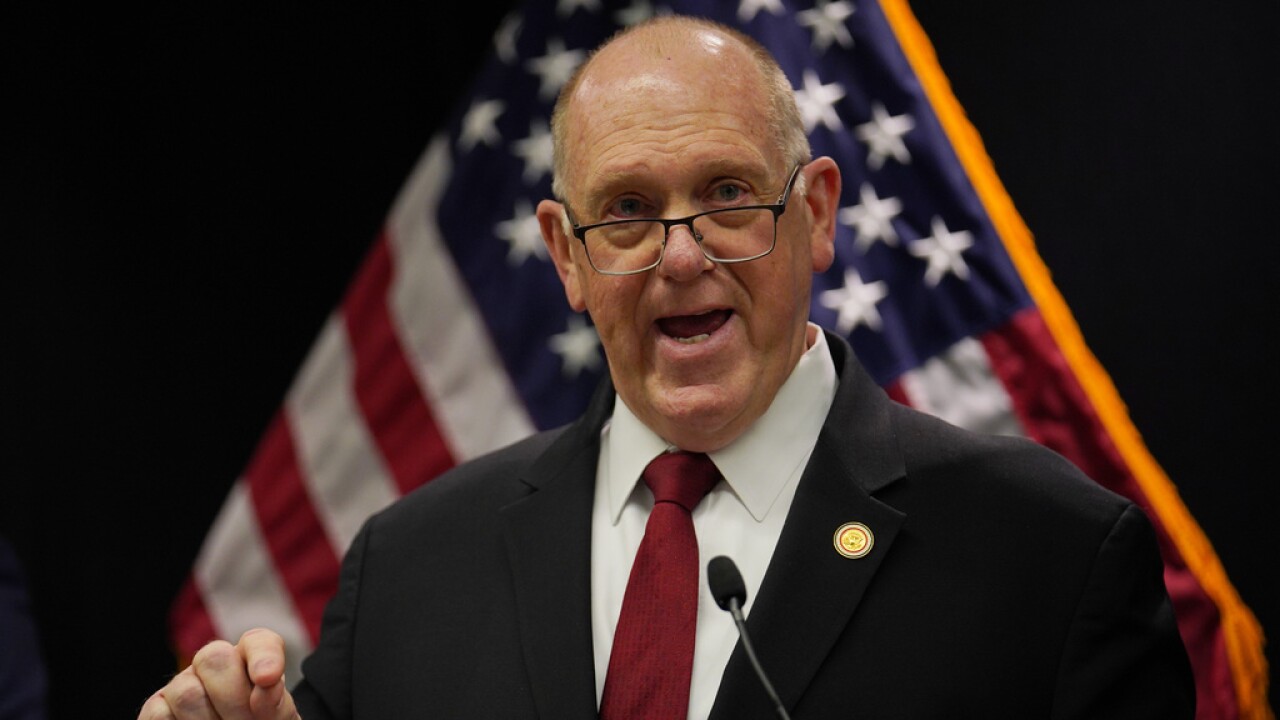
The Trump administration’s border czar has confirmed that a reduced federal security force will remain in Minnesota even as the bulk of immigration enforcement agents are pulled back from the state, a development that has reignited national debate over federal intervention and public safety.
Tom Homan, the administration’s appointed border czar, announced that although the majority of federal agents previously deployed to the Minneapolis–St. Paul area have been withdrawn, a “small contingent” of personnel will stay behind temporarily for security reasons. His remarks came amid growing political controversy over the presence of immigration enforcement officials in Minnesota and how their operations have intersected with local communities.
The announcement follows the recent disengagement of more than 1,000 ICE and Border Patrol agents from what was known as Operation Metro Surge, the largest interior immigration enforcement deployment under the current administration. While federal officials characterized the initial surge as crucial to combating fraud and immigration violations, the effort drew intense criticism from Minnesota leaders and civil rights advocates due to public pushback and several contentious incidents.
During a press briefing, Homan explained that the remaining security force is intended to ensure the safety of both federal personnel and the public and to continue strategic coordination with local law enforcement partners. He did not specify the exact number of officers who will remain but emphasized the presence is temporary, focused on safeguarding assets and maintaining collaborative efforts with state authorities.
Officials also cited the need to protect investigations linked to prior protests that erupted following controversial enforcement actions in the region. These protests at times resulted in tense confrontations between federal agents and demonstrators, further fueling debate about the appropriateness of a federal enforcement footprint in a metropolitan area far from the southern border.
Reactions to the announcement have been sharply divided. Supporters of the drawdown decision say the move balances enforcement priorities with community concerns, giving local agencies more space to address safety concerns without a large federal presence overshadowing daily life. They argue that retaining only a minimal security force reflects responsiveness to community voices while preserving essential federal functions.
Conversely, local officials, activists, and civil rights groups have criticized even the scaled-back presence as unnecessary and disruptive. Some community leaders assert that federal involvement should be phased out completely, arguing that local law enforcement is better equipped to manage neighborhood safety and that remaining federal agents could continue to inflame tensions.
The response from Minnesota’s political leadership reflects a mixture of cautious approval and lingering frustration. Several city officials have said they will “believe it when they see it,” indicating skepticism that federal agents will fully disengage even as stated. Others have welcomed the reduction but call for transparency on how many officers will remain and what their operational scope will be going forward.
Homan defended the administration’s approach, highlighting that a full withdrawal without a transitional security mechanism could jeopardize federal and local operations that are still active. He reassured the public that immigration enforcement will continue nationwide but that the force in Minnesota will be limited and mission-specific.
As the situation continues to unfold, attention is now focused on how local and federal authorities manage the transition and whether community concerns will shape future policy decisions regarding federal enforcement deployments in metropolitan areas.
Watch video below :