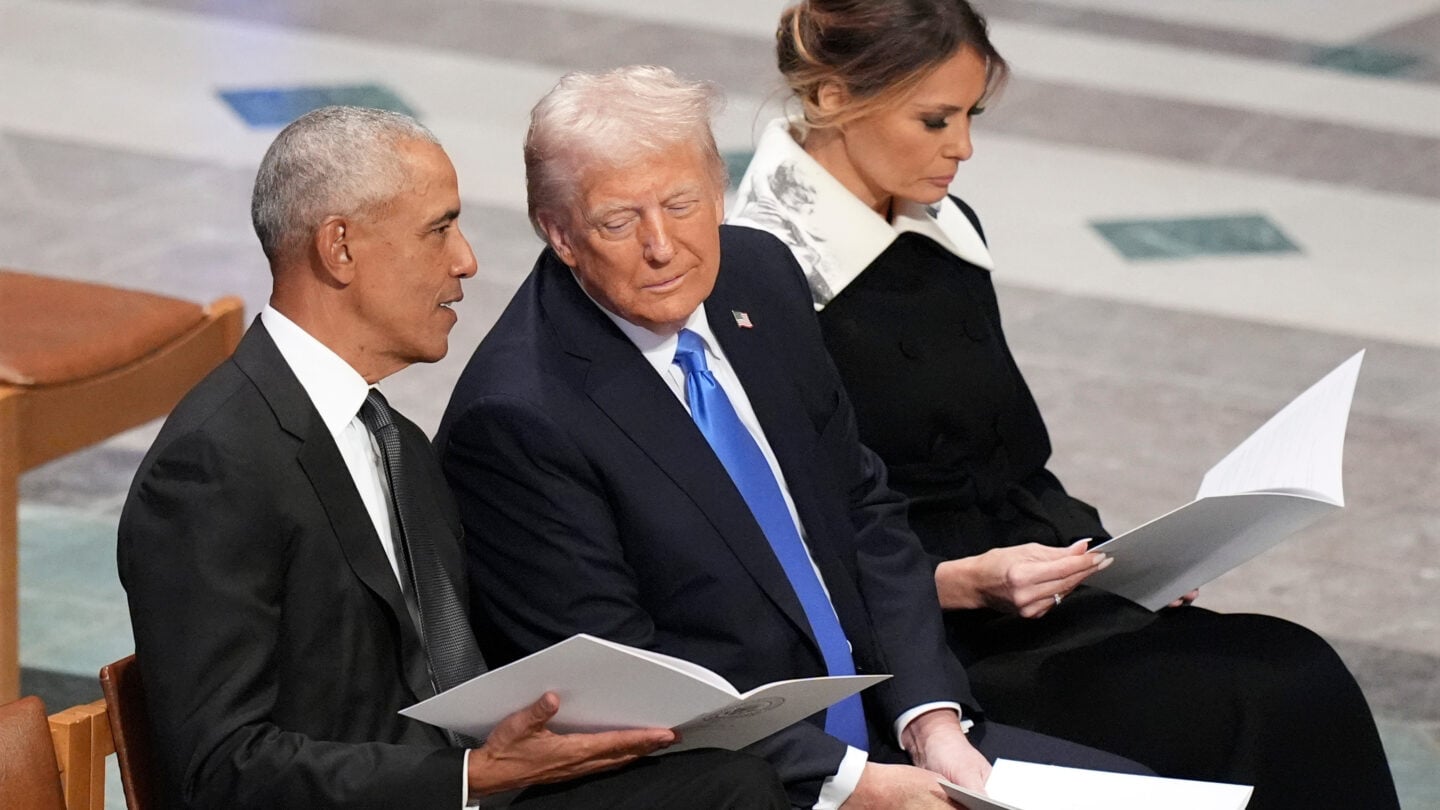
Former President Barack Obama has responded publicly after President Donald Trump reportedly shared or amplified a controversial post depicting Obama and former First Lady Michelle Obama as apes, igniting widespread backlash and renewed debate over racism, political rhetoric, and the increasingly toxic tone of U.S. politics.
The image, which quickly went viral online, drew immediate condemnation from civil rights advocates and political commentators who described it as a deeply offensive and historically racist portrayal. Comparisons of Black individuals to apes have long been recognized as a racist trope, frequently used to dehumanize African Americans throughout history. Critics argued that the post was not simply political satire, but an inflammatory attack that crossed moral and ethical lines.
In response, Obama issued remarks emphasizing the importance of rejecting hate-driven messaging and called on Americans to resist the normalization of racist imagery in public discourse. While he did not directly name Trump in his statement, his message was widely interpreted as a clear condemnation of the former president’s role in spreading such content.
“America is at its best when we treat each other with dignity,” Obama said, adding that political disagreements should never be used as justification for dehumanizing others. He also urged leaders to show responsibility in how they communicate, especially in an era where misinformation and hateful content can spread globally within minutes.
The incident has reignited political tensions between the two major parties, with Democrats accusing Trump of fueling division and racial hostility. Several lawmakers and activists called for Trump to issue a public apology and for social media platforms to take stronger action against content that promotes racist stereotypes.
Supporters of Trump, however, defended him by claiming the post was meant as a joke or political criticism rather than racism. Some argued that outrage over the image is being used as a political weapon during a highly polarized election season. Still, even some moderate commentators noted that such depictions carry serious historical weight and cannot be dismissed as harmless humor.
The controversy has also drawn attention to the broader issue of political messaging on social media, where controversial posts often generate massive engagement and are sometimes used to energize a political base. Analysts suggest the incident reflects how modern campaigns increasingly rely on viral content, even when it risks fueling hatred or public outrage.
Obama’s response marks a rare moment of direct engagement with a controversy tied to Trump’s social media activity. Over the years, Obama has largely avoided responding to Trump’s provocations, choosing instead to focus on policy discussions, civic engagement, and public unity. However, many observers say the seriousness of the imagery likely pushed him to address the issue more openly.
As the debate continues, the incident underscores the growing concern that racial attacks and dehumanizing language are becoming normalized in political discourse. Obama’s remarks served as both a condemnation of hateful rhetoric and a warning about the consequences of allowing such content to spread unchecked.
For many Americans, the controversy is yet another reminder that political conflict in the United States has entered a more aggressive and personal era—one where lines of decency are increasingly tested in the pursuit of attention and influence.
Watch video below :