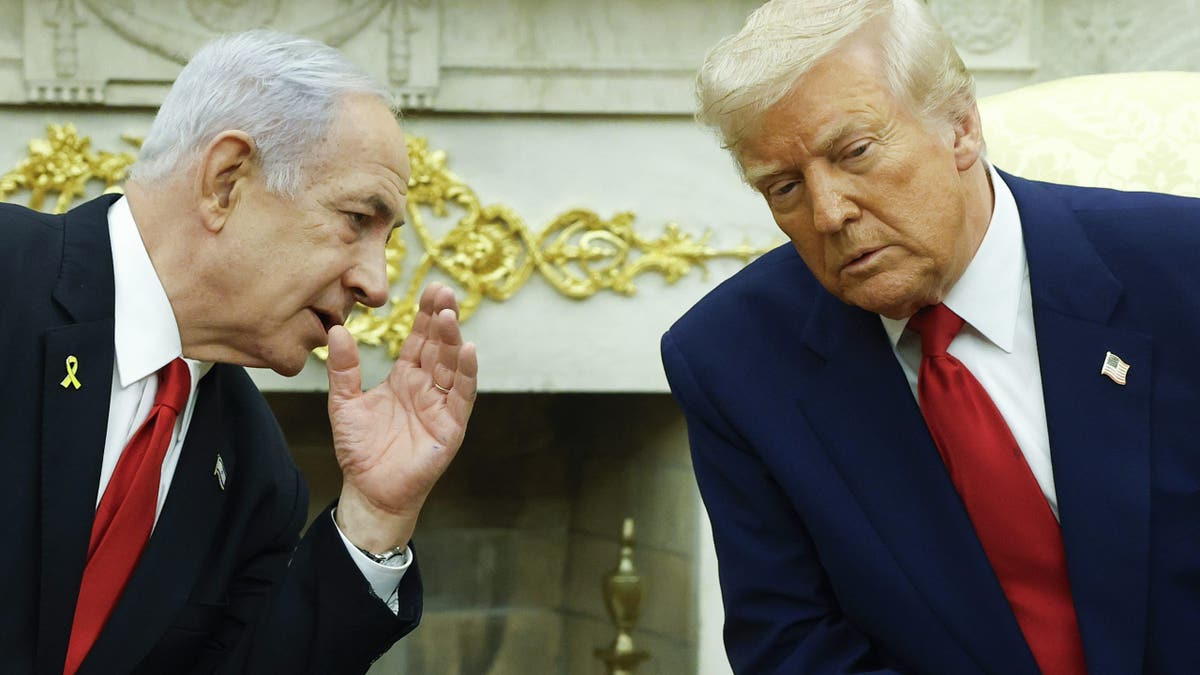
President Donald Trump and Israeli Prime Minister Benjamin Netanyahu are fueling fresh global speculation after new reports suggested both leaders may be reconsidering the idea of a direct military strike on Iran, at least for now. The high-stakes discussions come as tensions in the Middle East remain dangerously elevated, with Iran’s nuclear program once again dominating the international spotlight.
Netanyahu arrived in Washington for critical meetings with Trump, aiming to influence U.S. policy toward Iran and ensure Israel’s security concerns remain at the top of the agenda. While Israel has long viewed Iran as its greatest strategic threat, recent developments indicate Netanyahu may be urging a more cautious approach—one that keeps military options on the table but avoids immediate escalation.
The talks come amid renewed diplomatic activity involving Iran’s nuclear program. U.S. officials have reportedly resumed negotiations through international intermediaries, attempting to reach an agreement that would limit Iran’s nuclear capabilities. Trump has hinted that he is open to a “different kind of deal” with Iran, signaling that diplomacy remains a serious option despite ongoing pressure from hawkish voices.
At the same time, Trump is reportedly considering increasing the U.S. military presence in the region, including the possible deployment of another aircraft carrier strike group. Analysts view this as a strategic warning to Iran: negotiations may be possible, but Washington is prepared to act if talks fail or if Iran crosses certain red lines.
Netanyahu, meanwhile, is believed to be pushing Trump to demand tougher conditions from Tehran. Israeli officials have repeatedly argued that any agreement must go beyond nuclear restrictions and also address Iran’s ballistic missile program and support for militant proxy groups across the region. Netanyahu has made clear that Israel will not accept an agreement that leaves Iran with the ability to quickly expand its nuclear capacity in the future.
Despite the hardline messaging, the fact that both leaders are discussing diplomatic pathways has raised the question of whether an immediate strike is being delayed. Some observers believe Netanyahu may prefer to let the U.S. apply maximum pressure through negotiations and military positioning rather than risk triggering a wider regional war.
A strike on Iran could carry enormous consequences, including retaliation against Israel, attacks on U.S. assets, disruption of global energy supplies, and escalation involving Hezbollah or other Iran-backed forces. That reality makes the decision highly sensitive for both Washington and Jerusalem.
For Trump, the moment represents a balancing act: projecting strength while avoiding a conflict that could destabilize the region. For Netanyahu, the priority remains preventing Iran from reaching nuclear weapons capability, but doing so without igniting a catastrophic war.
As Trump and Netanyahu continue their discussions, the world is watching closely. Whether diplomacy succeeds or collapses could determine if the Iran crisis moves toward a historic deal—or toward a military confrontation with global consequences.
Watch video below :