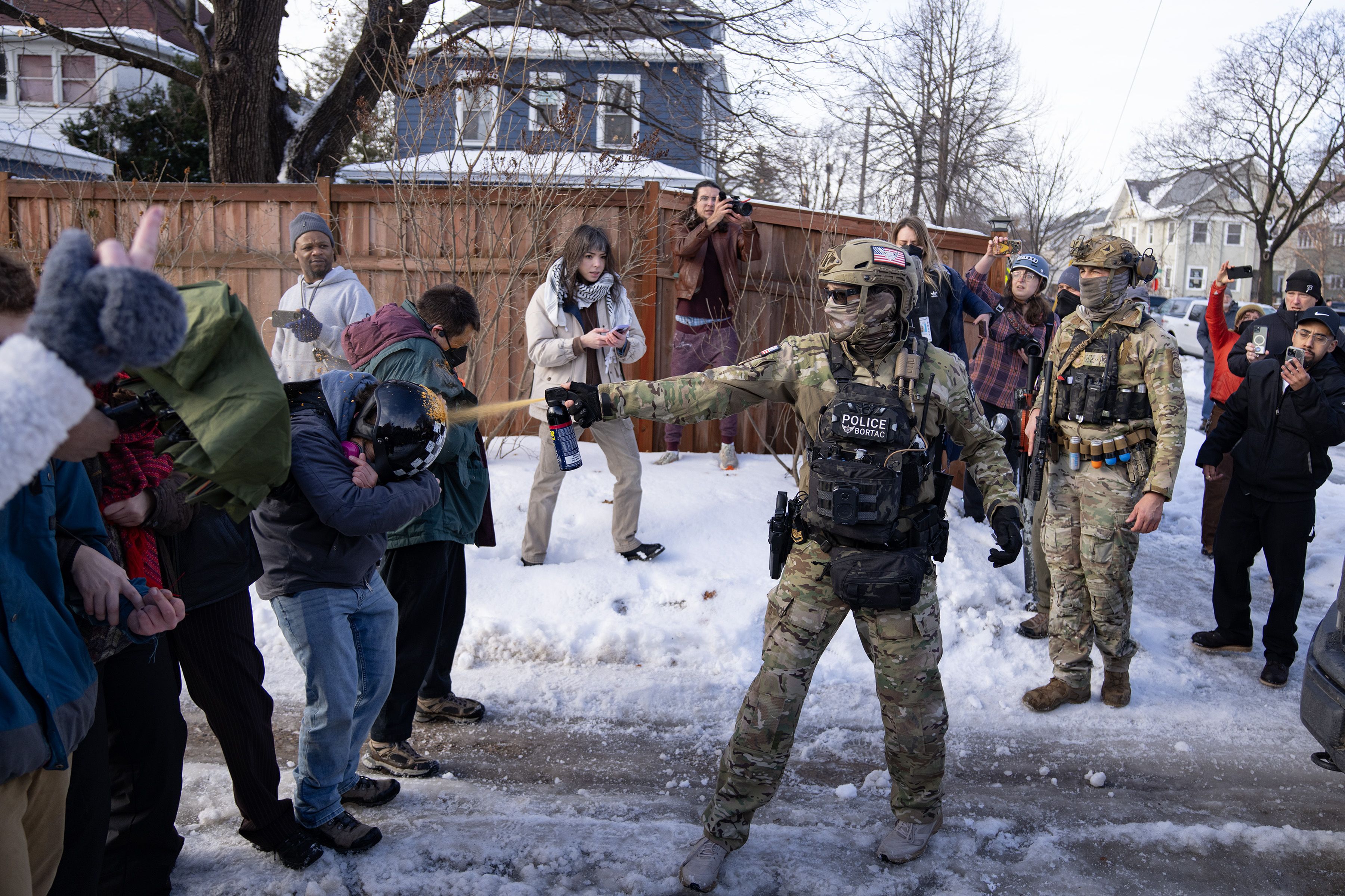
Recent Immigration and Customs Enforcement (ICE) actions in Minneapolis have sparked widespread controversy, extending far beyond the city itself. What began as a localized enforcement operation has quickly evolved into a national flashpoint, raising serious questions about transparency, accountability, and the future of public trust in law enforcement across the United States.
At the center of the controversy is the perception that ICE has operated with limited oversight and aggressive tactics in a city far removed from the U.S. border. For many Americans, this has blurred the line between immigration enforcement and traditional policing, fueling concern that federal agents are acting with powers not subject to the same checks and balances as local law enforcement.
One of the most damaging factors has been the lack of clear and timely communication following high-profile incidents linked to ICE activity. When investigations appear opaque or are handled exclusively at the federal level, public confidence suffers. Communities often expect independent reviews and transparency — especially when the use of force is involved. When those expectations are not met, suspicion quickly spreads beyond the immediate case.
The situation has been further intensified by the visible militarization of federal enforcement. Reports of heavily armed agents, unmarked vehicles, and large-scale deployments have alarmed residents and civil rights groups alike. Critics argue that such tactics create fear rather than safety, particularly in immigrant communities that already feel vulnerable. This climate of fear discourages cooperation with law enforcement, making communities less likely to report crimes or assist investigations.
Another critical issue is the spillover effect on local police departments. Although city and state officials have repeatedly stated that local police were not responsible for ICE operations, many residents do not distinguish between agencies. When trust in one branch of law enforcement erodes, it often drags down confidence in all of them. As a result, local officers may face increased hostility and reduced cooperation, even when they have no involvement in federal actions.
Political and legal disputes between federal authorities and state or city leaders have also played a role. Public disagreements, lawsuits, and emergency orders send a powerful message to citizens: that law enforcement itself is divided. This perception of institutional conflict weakens the sense of legitimacy that policing depends on to function effectively.
Nationally, the Minneapolis case has become symbolic of a broader debate over the role of federal law enforcement in domestic communities. Polling and public commentary suggest growing skepticism about whether aggressive immigration enforcement enhances public safety or undermines it by fracturing trust.
Ultimately, public confidence in law enforcement relies on accountability, restraint, and community engagement. When enforcement actions appear disproportionate, secretive, or disconnected from local norms, trust erodes — not just in one city, but across the country.
The ICE operations in Minneapolis serve as a cautionary example: without transparency and coordination, enforcement intended to uphold the law may instead weaken the very institutions it seeks to protect.
Watch video below :