

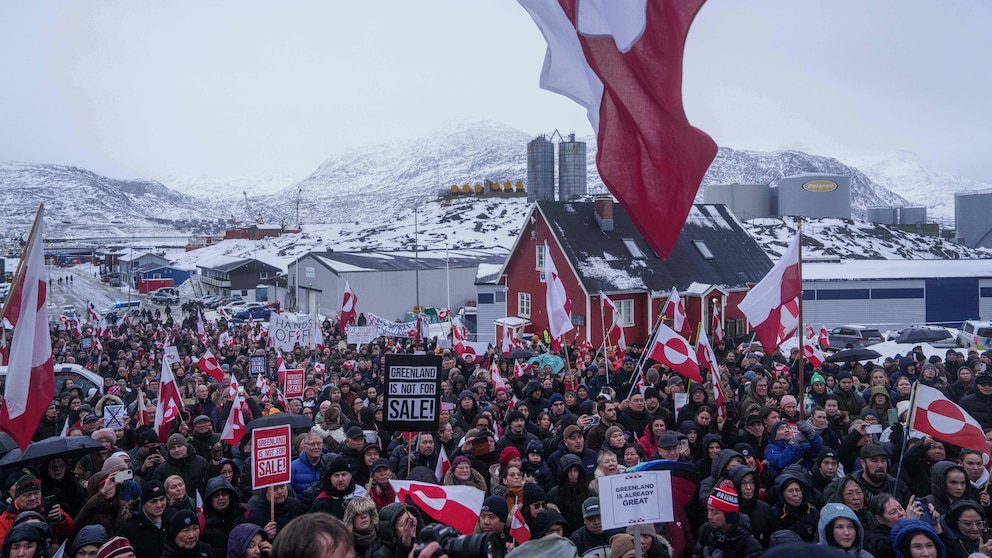
European leaders have issued a stark warning of a “dangerous downward spiral” in transatlantic relations after U.S. President Donald Trump threatened to impose sweeping tariffs on European allies amid renewed tensions over Greenland.
The dispute erupted after Trump suggested the United States could introduce punitive trade tariffs against several European countries, including Denmark, Germany, France, Sweden, and Norway, if they continue to oppose U.S. ambitions related to Greenland. The Arctic island, a semi-autonomous territory of Denmark, has become a focal point of geopolitical rivalry due to its strategic location, military importance, and vast untapped natural resources.
Trump argued that Greenland is vital to U.S. national security, citing its proximity to Arctic shipping lanes and growing competition with Russia and China. However, European officials rejected the use of economic pressure as a bargaining tool, calling the threats unprecedented between NATO allies.
In a joint response, senior EU officials warned that trade coercion could trigger a self-reinforcing cycle of retaliation, damaging long-standing diplomatic, economic, and security cooperation between the United States and Europe. European Commission leaders emphasized that Greenland’s status is not negotiable through tariffs and must be addressed through international law, dialogue, and NATO frameworks.
Denmark, which oversees Greenland’s foreign and defense policy, firmly reiterated that Greenland is not for sale and that its future must be decided by the Greenlandic people themselves. Officials in Nuuk echoed this position, stressing their right to self-determination while welcoming European unity against external pressure.
The tariff threats have also unsettled global financial markets, raising concerns of a renewed transatlantic trade war. Analysts warn that new U.S. tariffs on European goods could disrupt supply chains, increase consumer prices, and weaken cooperation at a time when Western allies face multiple global crises, including the war in Ukraine and rising instability in the Middle East.
European governments have begun discussing coordinated countermeasures, though many leaders say diplomacy remains their preferred option. Behind the scenes, emergency talks are underway to prevent further escalation while preserving NATO cohesion.
Experts note that Greenland’s importance has grown rapidly due to climate change opening Arctic sea routes, access to rare earth minerals, and its role in missile defense systems. However, they caution that turning security concerns into trade disputes risks undermining trust between allies.
As rhetoric intensifies, diplomats on both sides of the Atlantic face mounting pressure to de-escalate. Whether cooler heads prevail may determine not only the future of U.S.–EU trade relations, but also the stability of Western alliances in an increasingly contested Arctic region.
Watch video below :


