

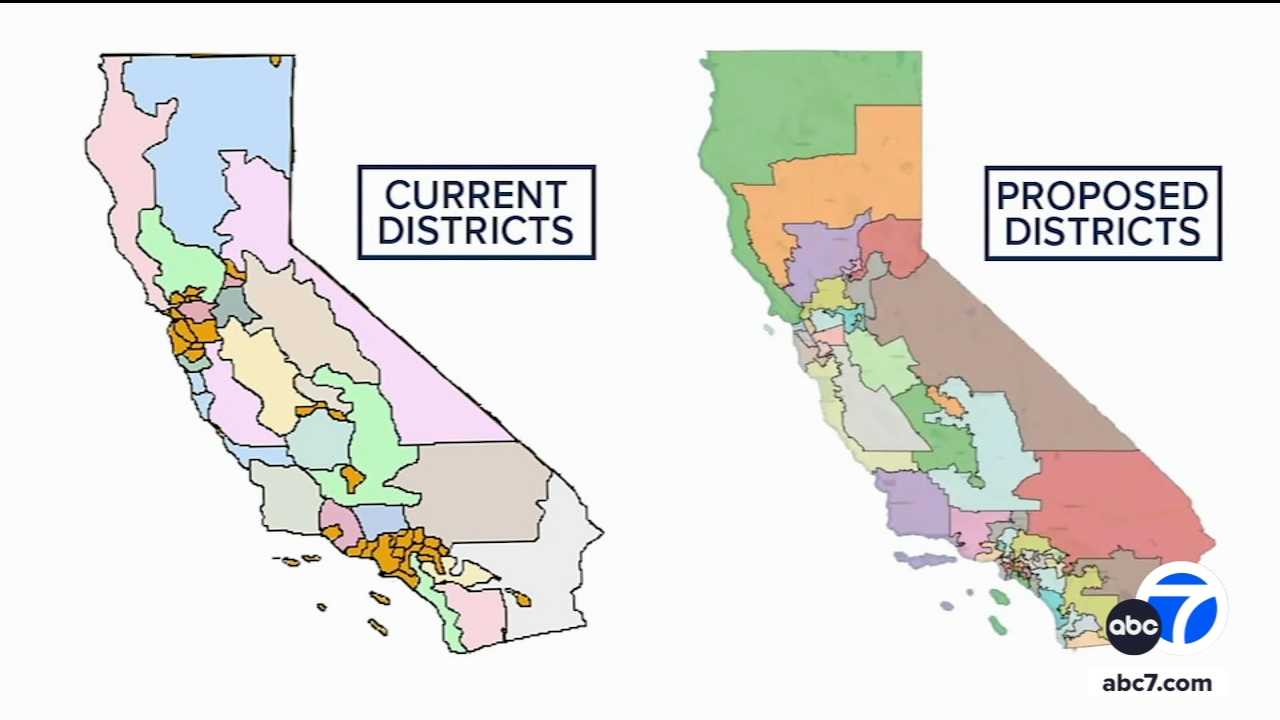
Federal judges have upheld California’s congressional maps drawn under Proposition 50, dealing a setback to challengers while leaving the door open for a potential showdown at the U.S. Supreme Court. The ruling preserves the state’s current district boundaries for now, but legal experts say the fight over redistricting authority is far from over.
Proposition 50 transferred the power to draw congressional and legislative districts from lawmakers to an independent citizens’ commission. Supporters argue the system reduces partisan gerrymandering and restores public trust in elections. Opponents, however, contend that the measure violates constitutional principles by stripping elected officials of a core legislative responsibility.
In their decision, the federal judges rejected arguments that the commission’s maps unlawfully diluted voting power or breached federal law. The court ruled that California’s redistricting process, as structured under Prop 50, remains consistent with constitutional requirements and prior Supreme Court precedent.
The ruling represents a major victory for state officials and voting rights advocates who have defended independent redistricting as a safeguard against political manipulation. They argue that citizen-led commissions produce fairer, more competitive districts and prevent politicians from choosing their voters.
However, critics of the maps say the decision does not end the controversy. Attorneys representing challengers signaled they are considering an appeal, potentially asking the U.S. Supreme Court to weigh in on whether states can delegate redistricting authority so extensively without violating federal constitutional standards.
At the heart of the dispute is a broader national debate over election integrity and democratic accountability. While independent commissions have gained popularity in several states, opponents argue they operate with limited transparency and insufficient oversight, raising concerns about accountability to voters.
Legal analysts note that the Supreme Court has previously allowed independent redistricting commissions, but changes in the Court’s composition could make a renewed challenge more consequential. A Supreme Court review could clarify — or reshape — the boundaries of state authority over election mapmaking nationwide.
The timing of the ruling is also significant. With future election cycles approaching, any disruption to California’s maps could have ripple effects across congressional races, party strategy, and voter representation. California holds the largest congressional delegation in the country, making its district lines politically influential far beyond state borders.
For now, the maps remain in effect, and election officials will continue operating under the existing boundaries. Still, the legal uncertainty adds another layer of tension to an already polarized national conversation about voting rights, election fairness, and the role of courts in shaping democracy.
Whether the case ultimately reaches the Supreme Court remains uncertain. What is clear is that California’s redistricting system — once seen as a settled reform — is again at the center of a high-stakes legal and political battle with national implications.
Watch video below :