

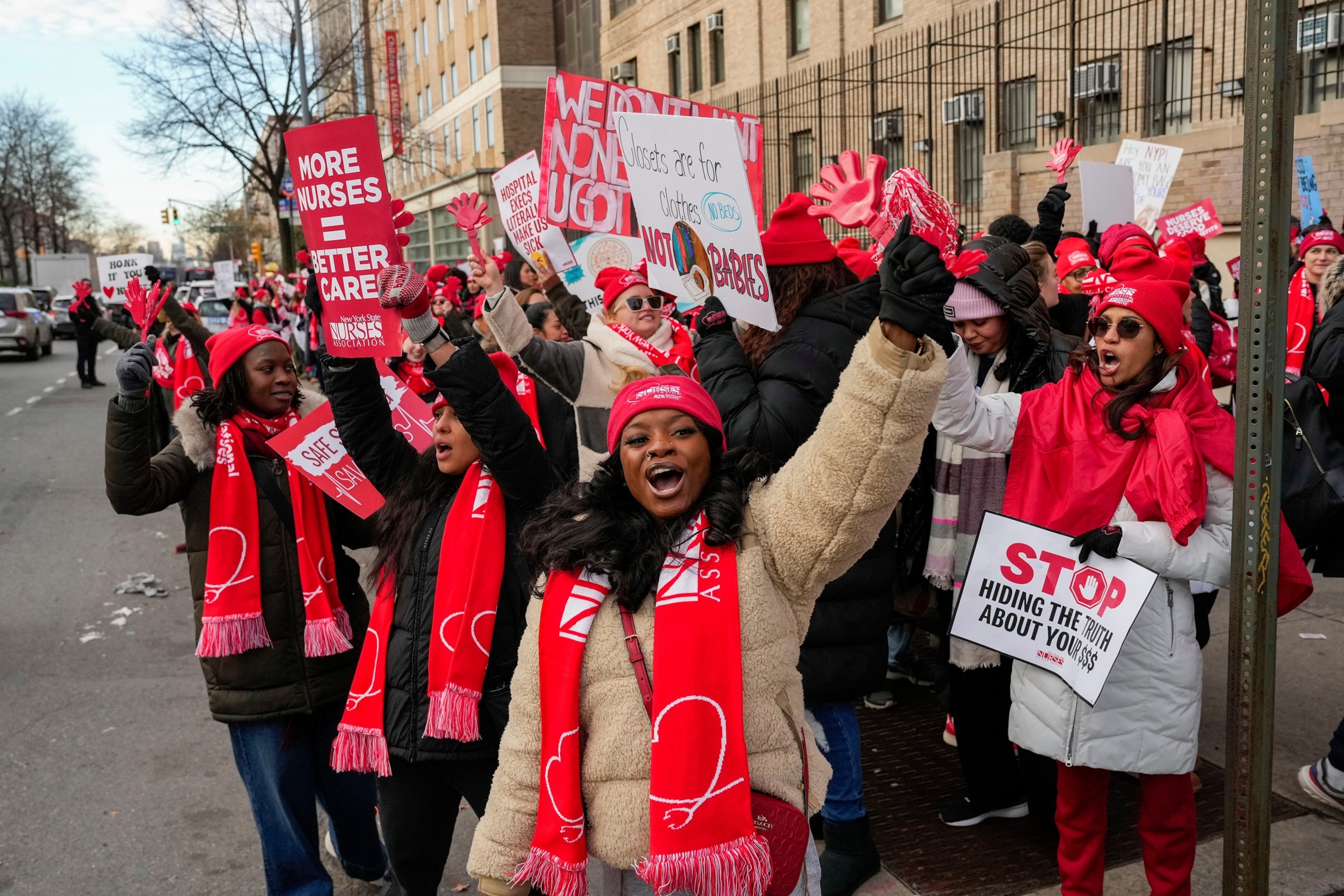
Nearly 15,000 nurses across New York City have walked off the job, launching one of the largest healthcare strikes in the city’s recent history. The coordinated action has disrupted operations at several major hospitals, underscoring deep tensions between frontline healthcare workers and hospital management over staffing levels, working conditions, and patient safety.
The strike began after contract negotiations between nurses’ unions and hospital administrators collapsed. Union leaders say nurses were left with no choice after months of stalled talks failed to address what they describe as chronic understaffing and unsafe patient-to-nurse ratios. According to the union, these conditions place both healthcare workers and patients at risk, especially during emergencies.
Hospitals affected by the walkout include some of New York City’s largest and busiest medical centers. Picket lines quickly formed outside hospital entrances, with nurses holding signs and chanting in support of safer staffing standards, improved wages, and better retention measures. Many nurses said burnout and exhaustion have reached critical levels following years of intense pressure during and after the COVID-19 pandemic.
Hospital officials say contingency plans are in place to maintain essential services. Administrators have brought in temporary replacement staff and emphasized that emergency rooms remain open. However, union representatives argue that replacement staffing is costly, unsustainable, and unable to match the experience of permanent nursing teams.
At the heart of the dispute is staffing. Nurses say they are routinely assigned too many patients at once, limiting the quality of care they can provide. They are calling for enforceable staffing ratios, not just promises or guidelines. Wage increases and improved benefits are also key demands, as nurses struggle with rising living costs in one of the most expensive cities in the country.
City and state officials are closely monitoring the situation. Some lawmakers have voiced support for the nurses, framing the strike as a public health issue rather than a labor dispute. Others have urged both sides to return to the negotiating table quickly to minimize disruptions to patient care.
Patients and their families have expressed mixed reactions. Some voiced concern about delays in appointments and procedures, while others said they support the nurses’ demands, arguing that safe staffing directly affects patient outcomes. Advocacy groups have echoed those concerns, noting that hospitals nationwide are facing similar staffing shortages.
Healthcare analysts say the New York City nurses’ strike reflects a broader national trend. Across the United States, nurses have increasingly turned to strikes and labor actions to push for systemic changes in healthcare delivery. The outcome of this dispute could influence negotiations in other cities and states.
Union leaders say they remain open to talks but insist meaningful progress is required before nurses return to work. Hospital executives, meanwhile, warn that prolonged strikes could strain hospital finances and complicate care delivery.
As negotiations continue, the strike has placed renewed focus on the challenges facing America’s healthcare workforce. Whether the walkout leads to lasting reforms or a rapid settlement, it has already sent a clear message: nurses are demanding structural change, not temporary fixes.
Watch video below :


