

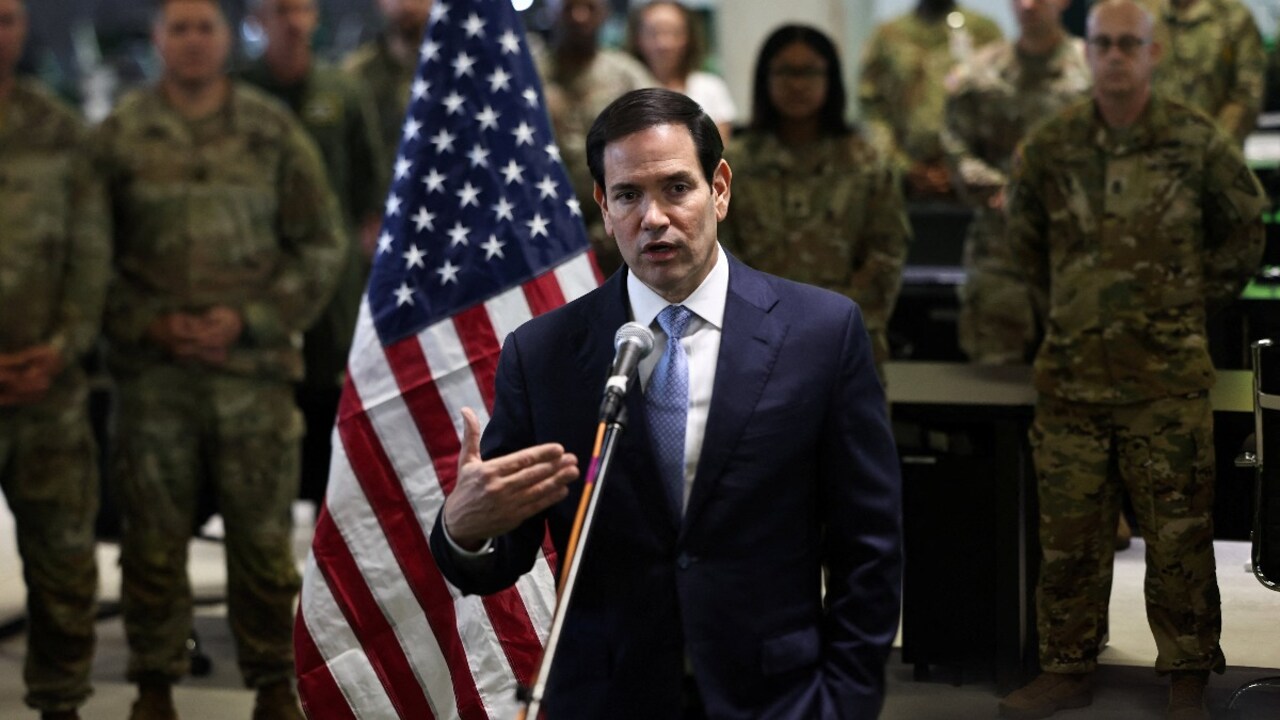
Behind the dramatic U.S. operation that led to the removal of Venezuelan leader Nicolás Maduro stands a familiar figure in American foreign policy: Senator Marco Rubio. Long known for his hardline stance on Latin America, Rubio played a central role in shaping the strategy, messaging, and political justification for one of the most consequential U.S. actions in the region in decades.
Rubio’s influence did not emerge overnight. For years, he has framed the Maduro government as a criminal enterprise rather than a legitimate state, repeatedly describing it as a narco-regime responsible for drug trafficking, corruption, and regional instability. This framing became foundational to the operation, allowing the administration to present the mission not as a conventional military intervention, but as a targeted law enforcement action.
According to officials familiar with internal deliberations, Rubio was deeply involved in early planning discussions. He pushed for a strategy that combined intelligence operations, economic pressure, and decisive action, arguing that prolonged sanctions alone had failed to weaken Maduro’s grip on power. His approach emphasized speed, surprise, and limited scope—designed to remove Maduro without triggering a wider regional conflict.
Equally important was Rubio’s role in shaping the public narrative. In the days surrounding the operation, he emerged as one of the administration’s most visible defenders, insisting that the United States was not at war with Venezuela. Instead, Rubio portrayed the mission as the execution of existing U.S. indictments against Maduro, stressing that the target was an individual, not the Venezuelan people or the country’s institutions.
This distinction proved politically critical. By framing the operation as a law enforcement action, Rubio helped the administration navigate legal and congressional scrutiny while maintaining public support. The message was clear: this was about accountability, not occupation.
Rubio also played a key role in linking the Maduro operation to broader U.S. national security goals. He repeatedly warned that Venezuela under Maduro had become a hub for hostile foreign influence, including ties to Cuba, Iran, and transnational criminal networks. Removing Maduro, Rubio argued, would weaken those networks and reshape the balance of power in the Western Hemisphere.
Following Maduro’s exit, Rubio continued to shape policy direction. He emphasized that the United States would not directly govern Venezuela, but would use economic leverage—particularly control over oil flows and sanctions enforcement—to influence the country’s transition. This approach reflected Rubio’s long-standing belief in applying sustained pressure rather than nation-building.
Critics accuse Rubio of escalating U.S. involvement in Latin America and setting a dangerous precedent. Supporters counter that his strategy achieved what years of diplomacy and sanctions could not. Either way, few dispute that Rubio’s fingerprints are all over the operation.
The Maduro episode highlights Rubio’s evolution from a vocal senator to a central foreign policy power broker. It also underscores a broader shift in U.S. strategy—one that favors targeted action, aggressive messaging, and decisive outcomes over prolonged stalemates.
As the region adjusts to a post-Maduro reality, Rubio’s role offers insight into how future U.S. interventions may be conceived and executed. His influence suggests that Latin America policy will remain assertive, strategic, and deeply shaped by security considerations in the years ahead.
Watch video below :


