

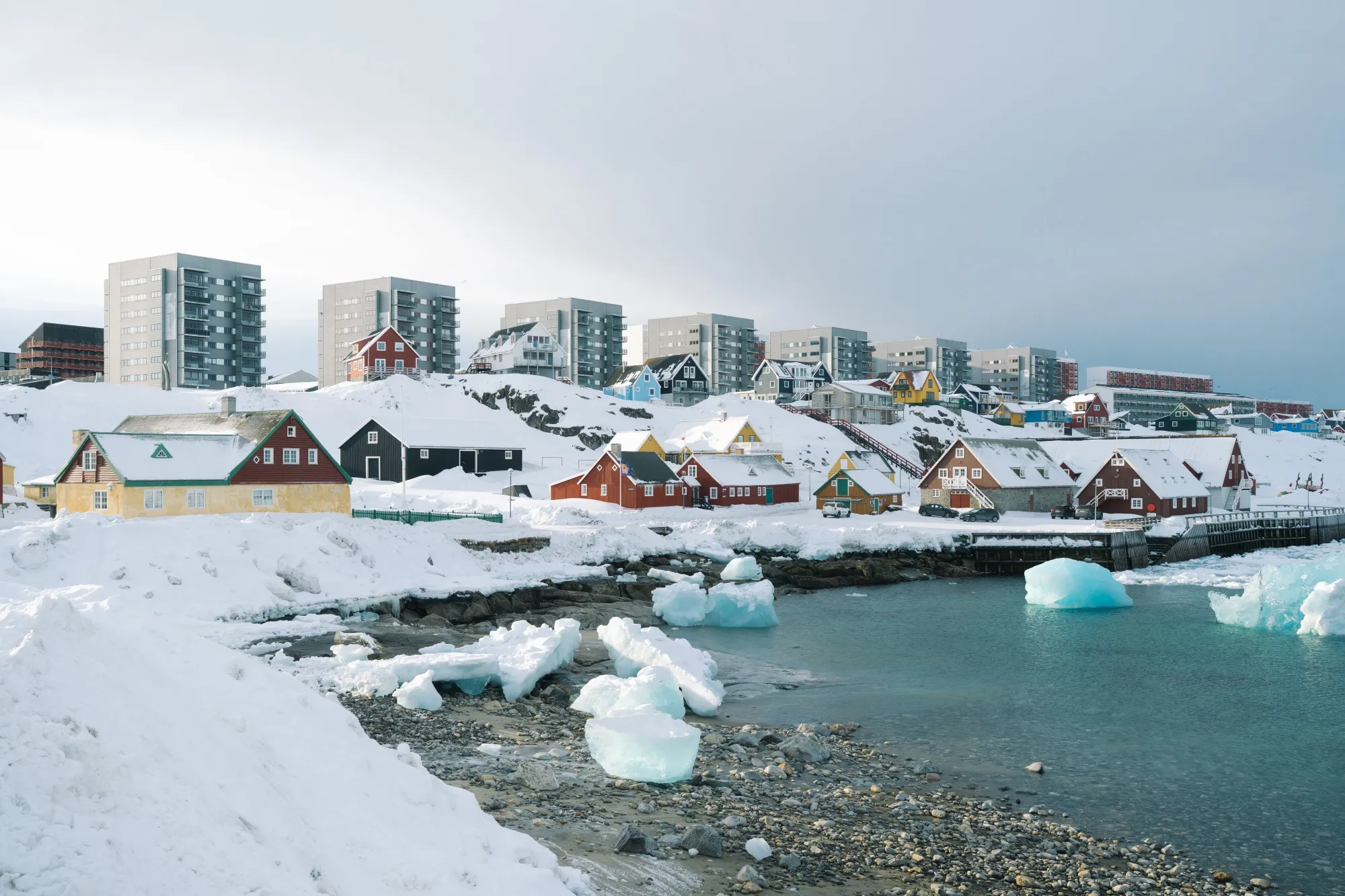
U.S. President Donald Trump has once again reignited global debate after declaring that the United States “has to have Greenland,” framing the world’s largest island as a strategic necessity for American national security and geopolitical influence. The remarks revive a controversial idea first raised during his presidency and underscore growing international competition in the Arctic region.
Speaking publicly, Trump emphasized Greenland’s importance not as a symbolic acquisition, but as a critical asset in an increasingly unstable global environment. “We have to have it,” he said, pointing to security concerns, strategic positioning, and emerging threats in the Arctic as key reasons behind his stance.
Greenland, an autonomous territory of Denmark, occupies a crucial geographic position between North America and Europe. As climate change accelerates Arctic ice melt, the region is becoming more accessible, opening new shipping routes, military corridors, and natural resource opportunities. This has drawn increased attention from global powers, including Russia and China, both of which have expanded their Arctic ambitions in recent years.
Supporters of Trump’s argument say Greenland’s strategic value is undeniable. The island already hosts a U.S. military presence, including Thule Air Base, which plays a vital role in missile defense and early-warning systems. From this perspective, strengthening U.S. control or influence over Greenland would enhance homeland security and protect American interests in the Arctic.
Trump’s comments, however, have drawn sharp criticism from political leaders and foreign policy experts. Danish officials have repeatedly rejected any notion of selling Greenland, emphasizing that the territory is not for sale and that its future should be determined by its people. Greenlandic leaders have also stressed their desire for greater autonomy and economic development, not absorption by another nation.
Critics argue that Trump’s rhetoric oversimplifies complex international relationships and risks damaging diplomatic ties with long-standing allies. They warn that framing Greenland as something the U.S. “must have” could be interpreted as dismissive of sovereignty and international norms.
The remarks come at a time when Arctic geopolitics are becoming increasingly tense. Melting ice has transformed the region from a frozen frontier into a strategic battleground, with nations racing to secure influence over resources such as rare earth minerals, oil, and natural gas. Control over Arctic territory also offers military advantages, including faster missile trajectories and expanded surveillance capabilities.
Trump’s renewed focus on Greenland fits into his broader worldview, which emphasizes territorial security, strategic leverage, and hard power diplomacy. While the idea of U.S. ownership of Greenland remains politically unrealistic, the underlying message reflects real shifts in global strategy and competition.
Ultimately, Trump’s statement has succeeded in one key respect: it has forced renewed attention on Greenland’s role in global security. Whether through diplomacy, partnerships, or military cooperation, the island’s importance is likely to grow as Arctic competition intensifies.
As global powers look northward, Greenland is no longer a remote, icy outpost—it is becoming a central piece in the puzzle of 21st-century geopolitics, and Trump’s blunt assertion ensures the debate is far from over.
Watch video below :


