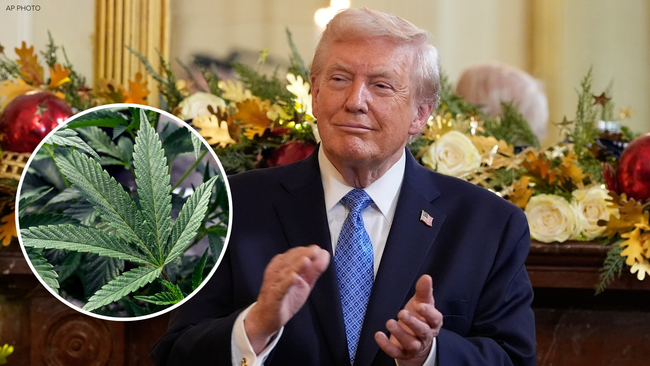
U.S. President Donald Trump has signed an executive order to reclassify marijuana, setting off a new debate over federal drug policy and the future of cannabis regulation in the United States. The move represents one of the most significant federal actions on marijuana in decades and could reshape how the government views, regulates, and studies the drug.
Under the executive order, federal agencies are directed to move marijuana out of its current Schedule I classification, a category reserved for substances considered to have no accepted medical use and a high potential for abuse. Marijuana has shared this status with drugs such as heroin and LSD for years, despite widespread legalization at the state level. The reclassification would place cannabis in a less restrictive category, acknowledging its potential medical applications and reducing federal barriers tied to research and regulation.
The decision signals a major shift in tone from the federal government. While the order does not legalize marijuana nationwide, it reflects growing recognition that current federal classifications no longer align with scientific research or public opinion. Medical marijuana is now legal in a majority of U.S. states, and recreational use has also been approved in several jurisdictions, creating a patchwork of laws that often conflict with federal policy.
Supporters of the executive order argue that reclassifying marijuana will expand medical research, allowing scientists to more easily study its therapeutic benefits and long-term effects. For years, researchers have complained that Schedule I restrictions made it extremely difficult to conduct federally approved cannabis studies. A lower classification could accelerate research into treatments for chronic pain, epilepsy, PTSD, and other medical conditions.
The move could also have economic and regulatory implications for the legal cannabis industry. Businesses operating in states where marijuana is legal have long faced heavy tax burdens and limited access to banking services due to federal restrictions. While the executive order does not resolve all of these issues, reclassification could ease some regulatory pressure and signal a more flexible federal approach.
Critics, however, say the action does not go far enough. Some lawmakers and cannabis advocates argue that full federal legalization — not reclassification — is necessary to eliminate legal uncertainty and address issues such as criminal justice reform and interstate commerce. Others, particularly conservative critics, warn that easing restrictions could increase marijuana use and raise public health concerns, especially among young people.
Trump has framed the executive order as a policy modernization effort, emphasizing science-based regulation rather than ideological positions. He has stated that marijuana policy should reflect medical evidence, economic realities, and the decisions already made by individual states, while still maintaining federal oversight.
The executive order now places responsibility on federal agencies, including the Drug Enforcement Administration, to carry out the reclassification process. That administrative step could take time and may face legal or political challenges, but the direction is clear: federal marijuana policy is changing.
As the U.S. continues to grapple with evolving attitudes toward cannabis, Trump’s decision marks a turning point in the national conversation. While it stops short of full legalization, the reclassification of marijuana could pave the way for broader reforms, increased research, and a more unified approach to cannabis policy in the years ahead.
Watch video below :