
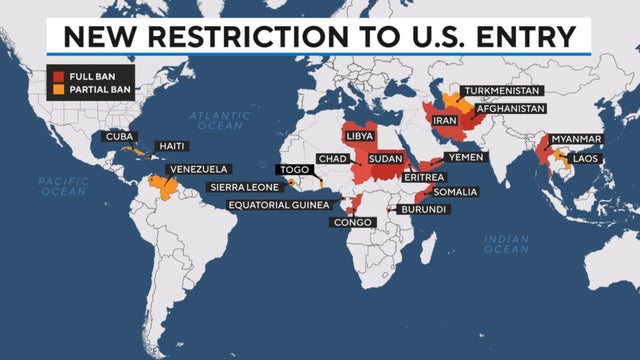
The Trump administration has announced an expansion of its controversial travel ban, adding five additional countries to the list of nations facing new entry restrictions into the United States. The decision, confirmed by administration officials, marks a significant escalation of immigration and national security policy and has already sparked strong reactions both domestically and internationally.
According to the White House, the expanded travel ban is aimed at strengthening border security and reducing potential national security risks. Officials argue that the newly added countries fail to meet updated U.S. standards for identity verification, information sharing, and passport security. As a result, certain categories of travelers from those nations will face tighter restrictions or outright entry bans, depending on visa type and individual circumstances.
The administration emphasized that the policy is not based on religion or race, but rather on security assessments conducted by federal agencies. “This is about protecting Americans,” a senior official said, adding that the move reflects lessons learned from previous security reviews. The Department of Homeland Security and the State Department were both involved in evaluating the countries affected by the expansion.
Critics, however, quickly condemned the decision, calling it discriminatory and politically motivated. Civil rights groups and immigration advocates argue that travel bans unfairly target foreign nationals and harm families, students, and workers with legitimate reasons to enter the United States. Several organizations signaled they may pursue legal challenges, citing concerns over due process and equal protection under the law.
Democratic lawmakers also voiced opposition, warning that the expanded travel ban could damage America’s global reputation and strain diplomatic relationships. “This policy sends the wrong message to the world,” one senator said, arguing that it undermines U.S. leadership and cooperation on international security issues. Some foreign governments affected by the decision expressed disappointment and requested further clarification from U.S. officials.
Supporters of the Trump administration praised the move as a necessary step to prioritize national security. Conservative commentators and allies argued that the president is fulfilling campaign promises to tighten immigration controls and prevent potential threats before they reach U.S. soil. They also pointed to public opinion polls showing continued concern among voters about border security and immigration enforcement.
The expanded travel ban is expected to impact tourism, education, and business travel. Universities warned that restrictions could affect international students and academic collaboration, while business groups cautioned about potential disruptions to global talent recruitment and trade relationships. Airlines and travel companies are also monitoring the situation closely as travelers seek clarity on new rules and exemptions.
This is not the first time the Trump administration has revised or expanded travel restrictions. Earlier versions of the policy faced legal challenges and court rulings, ultimately leading to revised measures that were upheld by higher courts. Legal experts say the latest expansion could once again be tested in the judicial system, depending on how it is implemented and enforced.
As the policy takes effect, federal agencies are expected to issue detailed guidance outlining exemptions, waiver processes, and implementation timelines. For now, the expansion of the travel ban underscores the administration’s continued focus on immigration as a defining issue—one that remains deeply polarizing as the political debate over border security and national identity continues.
Watch video below :