

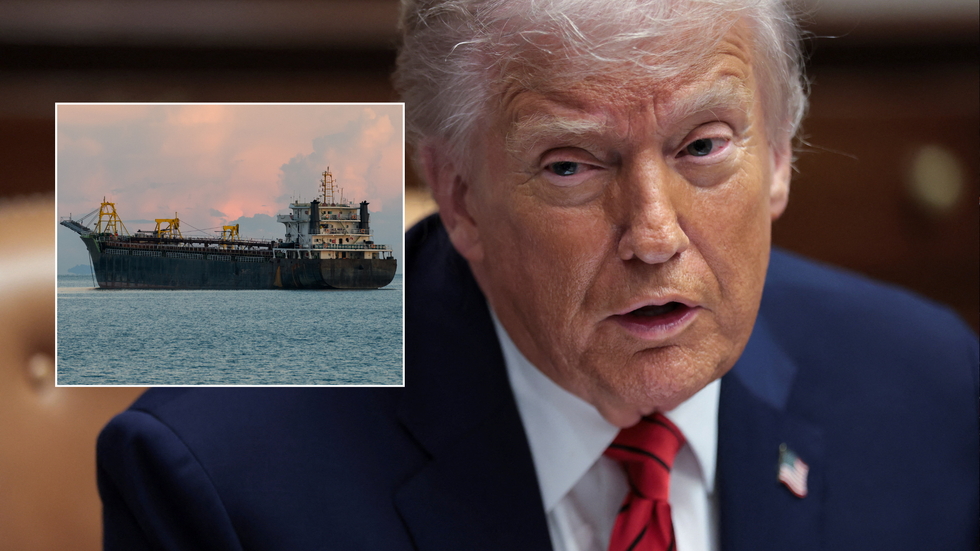
President Donald Trump confirmed that the United States has seized a very large oil tanker off the coast of Venezuela, marking one of the most dramatic escalations in U.S.–Venezuela relations in recent history. The move, announced at the White House and followed by intense press room questioning, has prompted fierce international criticism and raised serious questions about legal authority, economic motives, and potential global ramifications.
During a December 10, 2025 event, Trump told reporters, “We’ve just seized a tanker on the coast of Venezuela — large tanker, very large, largest one ever seized, actually.” The president emphasized that the seizure was carried out “for a very good reason” but provided few specifics during the exchange.
When pressed by reporters — including questions reminiscent of the viral phrasing, “Now that we’ve seized this tanker…” — Trump was notably terse. He declined to identify the vessel’s owner and sidestepped debate over the legality of the operation. Instead, when asked what would happen to the oil aboard the tanker, Trump responded simply, “Well, we keep it, I guess.”
This blunt answer quickly became the focal point of international headlines and political commentary. The tanker, identified by maritime tracking sources as the VLCC Skipper, was reportedly transporting sanctioned Venezuelan crude and had previously been tied to Iranian oil distribution networks subject to U.S. sanctions. Federal agencies including the FBI, Homeland Security, and the U.S. Coast Guard executed a warrant to board and seize the vessel at sea, supported by Navy and special operations personnel.
The Venezuelan government condemned the action, calling the seizure “blatant theft” and an “act of international piracy”. Caracas pledged to denounce the United States before international legal bodies and defend its sovereignty and natural resources. Latin American leaders and global diplomats have expressed deep concern that this escalation could threaten regional stability and provoke broader conflict.
Domestically, U.S. lawmakers have also criticized the decision. Some Republicans and Democrats alike voiced alarm that the action could draw the United States into an unnecessary confrontation, with comments suggesting the move might resemble “the beginning of a war.” Others argue that enforcement of sanctions and disruption of illicit oil networks is a legitimate use of authority that undermines criminal and authoritarian regimes.
Markets reacted swiftly, with crude oil prices climbing modestly as traders assessed the geopolitical risk. Energy analysts note that Venezuela holds some of the world’s largest proven oil reserves, making it a strategic focal point for both U.S. foreign policy and global oil markets.
Beyond the immediate diplomatic fallout, this episode highlights deeper tensions in U.S. foreign policy strategy. Trump’s administration has emphasized a hardline approach toward both Venezuela and Iran, framing actions like the tanker seizure as part of a broader campaign to isolate and pressure regimes accused of illicit activity. Yet critics argue that seizing foreign assets at sea — especially one carrying millions of barrels of oil — places the United States in unprecedented territory with vast legal and ethical implications.
Watch video below :


