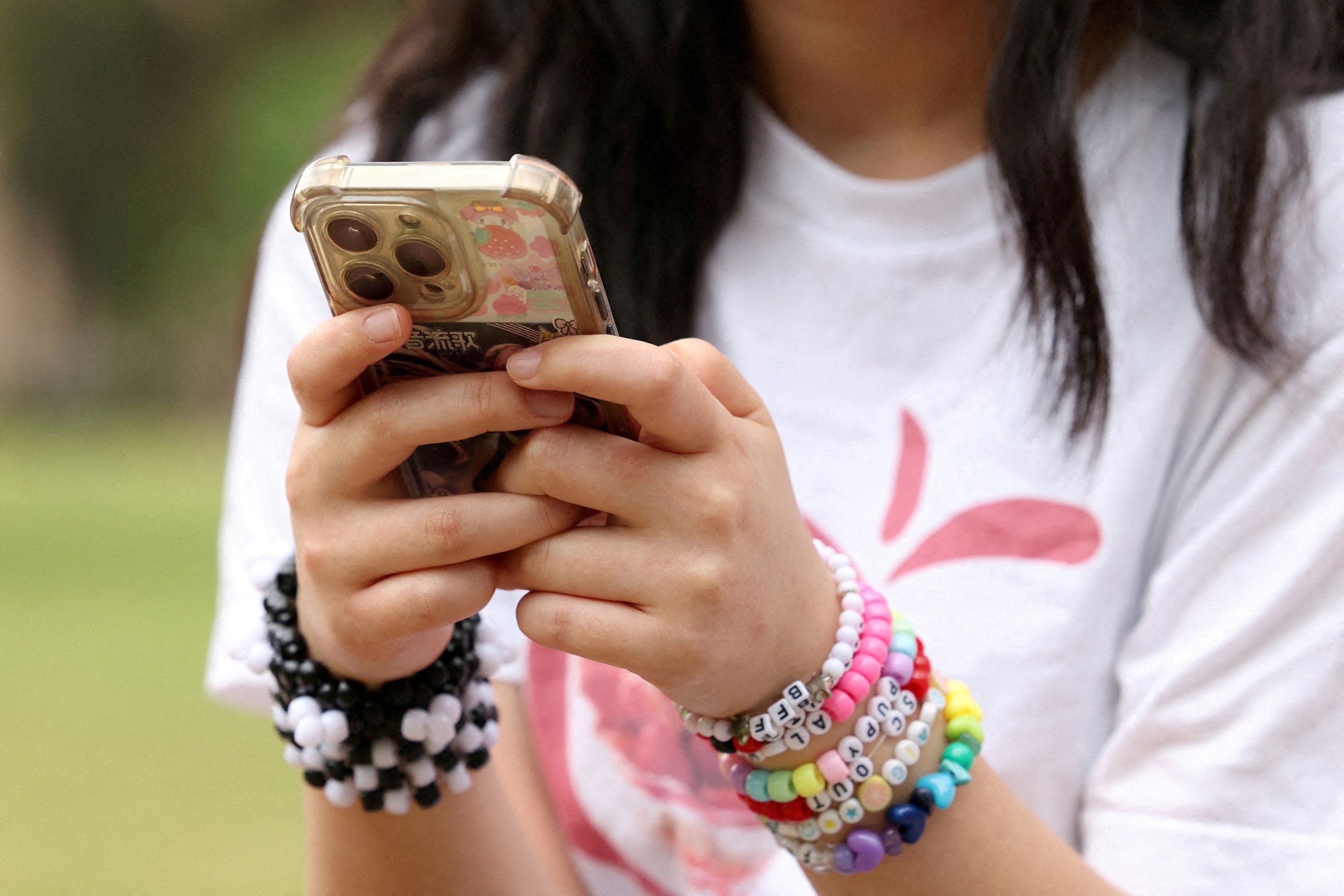
Australia has officially implemented one of the world’s most sweeping online safety laws, enforcing a nationwide ban on social media use for children under 16. The new regulation, now in effect, marks a historic moment as Australia becomes the first country to introduce such broad restrictions targeting young users on major digital platforms.
Under the law, any social media platform classified as “age-restricted” must block users younger than 16 from creating or maintaining accounts. This includes a wide range of platforms—Facebook, Instagram, TikTok, Snapchat, YouTube, X, Reddit, Discord, Twitch, and others commonly used by teenagers. Existing accounts belonging to underage users are required to be disabled or suspended until the user can prove they meet the age threshold.
To enforce the ban, companies are required to adopt reasonable and effective age-verification methods, which may include facial recognition checks, selfie-based age estimation, or additional identity prompts. Companies that fail to comply face fines of up to A$49.5 million, making this one of the toughest compliance regimes for social platforms worldwide.
The Australian government argues that the ban is essential for protecting young people from online harms. Officials cite concerns about exposure to explicit content, cyberbullying, addictive algorithms, privacy risks, and the mental health impact of constant comparison on social platforms. Advocates for the law say children today face digital dangers never seen in previous generations, and stricter boundaries are necessary to safeguard their well-being.
Support for the protection policy has grown in recent years as studies continue to link social media use among young teenagers to increased anxiety, depression, sleep disruption, and body-image issues. Many parents and mental-health experts praise the ban as a long-overdue step that will encourage children to engage more in offline activities, sports, hobbies, and in-person socialization.
However, the new law has also sparked intense debate. Critics argue that banning platforms outright may have unintended consequences. Some worry that teenagers who rely on online communities for emotional support—especially those in marginalized groups—could lose vital spaces for connection. Others note that the ban may simply push young users to alternative or unregulated platforms, making it harder to monitor their online behavior.
There is also ongoing concern about the practical challenges of age verification. Without requiring official ID uploads, companies must rely on AI-driven age estimation, which is imperfect and could mistakenly block legitimate users over 16—or fail to catch underage users who find workarounds. Privacy advocates warn that increasing biometric data collection could introduce new risks to young people’s digital safety.
Despite these concerns, Australia’s move is being closely watched by governments around the world. Lawmakers in Europe, North America, and parts of Asia are already considering similar measures as global discussions intensify around children’s safety in the digital age.
Whether the ban will deliver long-term benefits or spark more controversy remains to be seen, but one thing is clear: Australia has taken a bold step that could reshape how young people interact with the online world for years to come.
Watch video below :