

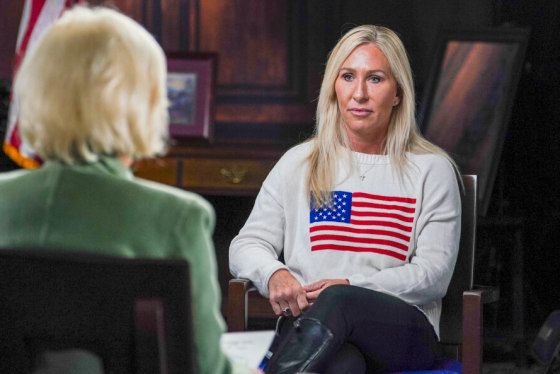
Marjorie Taylor Greene’s highly anticipated 2025 appearance on “60 Minutes” quickly became one of the most talked-about political interviews of the year. Known for her unapologetic style and hardline positions, the Georgia congresswoman used the national platform to reaffirm her political identity, challenge her critics, and present a bold vision for the future of the Republican Party. The interview, which aired on CBS, sparked intense discussion across social media, newsrooms, and political circles nationwide.
Greene began by addressing her evolving role within the GOP, emphasizing that she sees herself not as an outsider but as a driving force for what she calls “a renewed American direction.” She argued that the party must prioritize national security, aggressive border enforcement, and strict federal spending limits, while also rejecting what she describes as “the growing influence of radical progressive ideology.” Throughout the interview, Greene positioned herself as a defender of traditional values and a fighter against what she considers the political establishment in Washington.
One of the most widely discussed moments occurred when Greene tackled questions about her controversial statements from past years. While she acknowledged that some of her earlier remarks fueled backlash, she insisted that her intentions had been consistently misinterpreted by the media. She criticized what she called “manufactured outrage” and argued that political opponents use selective framing to undermine her credibility. “My words are judged differently because I challenge the system,” she stated, reiterating that she stands firm in her beliefs.
The interview also delved into Greene’s policy priorities for 2025 and beyond. She underscored her commitment to strengthening border security through expanded patrols, increased surveillance, and tighter immigration enforcement. Greene also advocated for reducing federal spending, calling the national debt an urgent threat to America’s future. On foreign policy, she argued for a more restrained U.S. approach abroad, contending that the country must “stop funding endless wars” and focus on domestic stability.
Healthcare and cultural issues also played a central role in the discussion. Greene criticized federal COVID-19 policies and called for greater medical freedom, while taking aim at what she labeled “political indoctrination in schools.” She emphasized parental rights, stating that families should have more control over curriculum choices and school governance.
The “60 Minutes” segment featured both supporters and critics. Allies praised Greene for her blunt, unfiltered communication style and her willingness to address contentious topics head-on. Opponents, however, argued that the platform legitimized her most incendiary views, claiming the interview failed to hold her accountable for misinformation. CBS defended the decision, stating that interviewing influential political figures—regardless of controversy—is essential to informing the public.
As the interview continues to dominate headlines, analysts say it reinforces Greene’s growing influence within the Republican base. Whether viewed as a truth-teller or a provocateur, Marjorie Taylor Greene’s 2025 “60 Minutes” appearance undeniably cemented her status as one of the most polarizing—and consequential—voices in American politics.
Watch video below :


