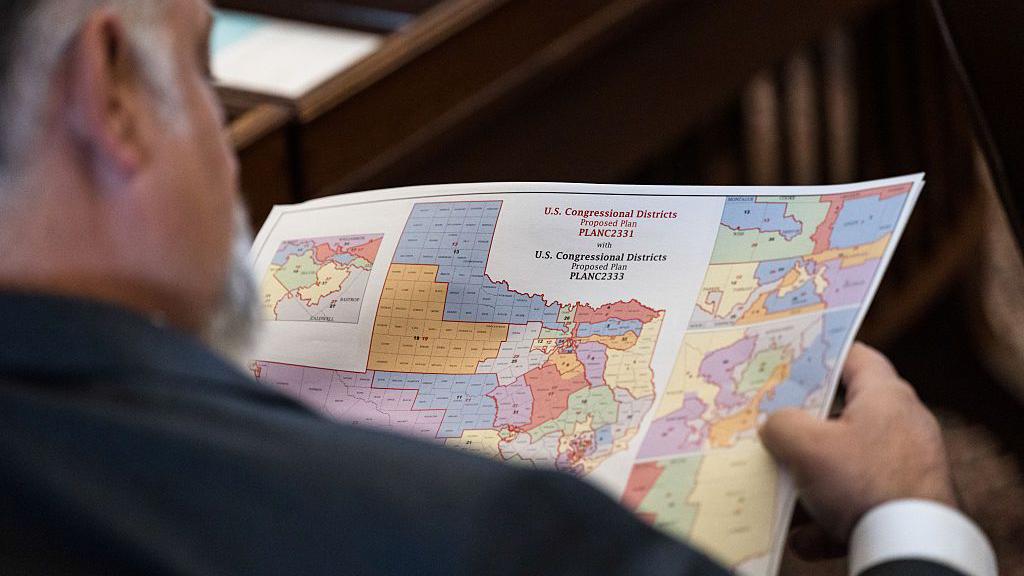
The Supreme Court of the United States (SCOTUS) has cleared the way for Texas to use its controversial new congressional district map for the 2026 elections — a major win for Republicans just months before midterms. In a 6–3 decision on December 4, 2025, the Court suspended a lower-court order that had blocked the map, concluding that Texas’s lines were drawn for partisan advantage rather than unconstitutional racial discrimination.
This ruling instantly rewrites the political battleground in Texas. The map, approved this summer by the Republican-controlled state legislature and signed into law by Gov. Greg Abbott, was designed to flip as many as five U.S. House seats — potentially boosting the party’s hold in Congress and bolstering their bid to maintain a majority.
Critics had argued the new map was a textbook case of racial gerrymandering. In November 2025, a federal court in El Paso ruled the map unconstitutional, citing evidence that it diluted the voting power of Black and Latino communities by breaking up historically diverse “coalition districts.” Under that order, Texas was supposed to revert to the 2021 boundaries.
But when Texas appealed, SCOTUS temporarily lifted the injunction on November 21 — and now the full Court has reinstated the map through the 2026 election. Writing for the majority, conservative justices argued the lower court had overstepped by overriding the legislature’s judgment about where to draw lines. They said the court improperly “interfered with state election administration” at a sensitive moment in the candidate-filing cycle and ignored the presumption that lawmakers drew district boundaries in good faith.
The decision drew sharp criticism from the Court’s three liberal justices, who dissented. In their view, the ruling undermines protections for minority voters and weakens the federal judiciary’s ability to check partisan redistricting.
For Republicans in Texas and nationally, the ruling is being celebrated as a strategic victory. Given the state’s population and shifting demographics, the new map could reshape the balance of power in the U.S. House — helping the party secure a more stable majority in advance of the 2026 midterms.
But for many civil-rights groups and Democrats, the decision represents a setback for fair representation. They warn that minority communities may see their political influence diluted, that safe-seat districts will solidify, and that competitive districts will disappear. They argue the ruling opens the door for more aggressive “mid-decade” redistricting efforts in other states.
With candidate filing deadlines looming and primary elections approaching, the map reinstatement brings immediate consequences. Campaign strategists, activists and political observers are now scrambling to understand which incumbents or challengers will benefit — and whether new coalition-building efforts are possible under the revised boundaries.
As the redrawn districts take effect, all eyes turn to 2026: the new map may determine not only who represents Texas in Congress, but also how power is distributed nationally just as America braces for potentially seismic mid-term results.
Watch video below :