President Donald Trump has indicated that Hungary could potentially receive an exemption from U.S. sanctions on Russian oil, highlighting the tension between enforcing sanctions and accommodating allied nations with limited energy options. The announcement comes amid growing scrutiny of Hungary’s heavy reliance on Russian crude delivered via pipeline, which accounts for nearly 86% of the country’s oil consumption.
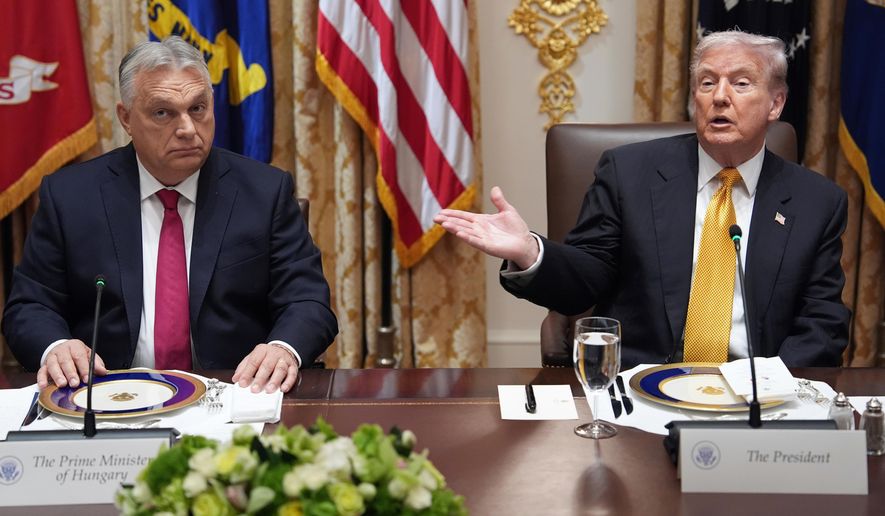
Trump met recently with Hungarian Prime Minister Viktor Orbán at the White House, where Orbán emphasized the difficulty Hungary faces in sourcing oil from alternative markets due to its landlocked geography and lack of seaports. In response, Trump acknowledged that Hungary’s situation is “very difficult” and suggested Washington may consider a waiver. “We’re looking at it… because it’s very difficult for them to get oil from other areas,” Trump said.
The potential exemption comes in the context of Trump’s broader stance on energy and sanctions. In September 2025, he called on all NATO members to stop buying Russian oil, asserting that continued purchases undermine the West’s leverage against Russia and prolong the war in Ukraine. Hungary’s request for an exemption represents a complex case where strategic alliances, energy dependency, and geopolitical goals intersect.
Hungarian officials have argued that cutting off Russian oil would severely impact their economy, potentially causing an immediate 4% drop in GDP. They stress that pipeline infrastructure and the lack of alternatives make it nearly impossible to comply with a strict sanctions regime without severe domestic consequences.
The U.S. response remains careful. While Trump appears open to granting flexibility, no formal exemption has been issued. Officials stress that any decision must balance the integrity of sanctions with practical energy realities. Analysts note that granting a waiver could set a precedent for other allies, potentially weakening the unified front against Russia while also strengthening U.S.–Hungary bilateral relations.
Beyond oil, the discussions between Trump and Orbán have included potential U.S. energy cooperation, such as supplying nuclear fuel and collaborating on small modular reactors. These talks suggest that Washington may leverage energy partnerships to incentivize Hungary while still promoting broader Western energy and security objectives.
The situation underscores the broader challenge of enforcing sanctions against Russia while maintaining cohesion among NATO allies with differing energy dependencies. Hungary’s case is particularly illustrative of how geography, infrastructure, and economic dependence can complicate uniform application of foreign policy measures.
For Trump, signaling openness to Hungary’s request allows him to present a nuanced approach: projecting strength on sanctions enforcement while accommodating a strategic European partner. The final decision on the exemption will demonstrate how Washington navigates the delicate balance between energy security, alliance unity, and geopolitical strategy in an era of high-stakes international diplomacy.
Watch video below :