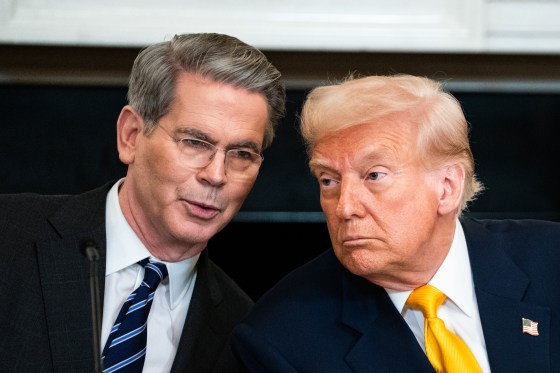
CNN anchor Jake Tapper sparked headlines this week after confronting Treasury Secretary Scott Bessent with a pointed question: “Will President Trump attend the Supreme Court oral arguments on his tariff cases?”
The exchange took place on CNN’s “State of the Union”, ahead of the November 5, 2025 hearing before the U.S. Supreme Court, where justices are set to debate the legality of Trump’s sweeping global tariffs. The cases challenge his administration’s use of the International Emergency Economic Powers Act (IEEPA) — a decades-old law typically reserved for sanctions and national security measures — to impose broad trade tariffs without congressional approval.
Bessent avoided giving a direct answer, saying only, “I haven’t seen his schedule.” When Tapper pressed again, asking whether Bessent himself would attend, the Treasury Secretary replied, “I’m not planning on going.”
The evasive tone quickly caught media attention, as Trump’s potential courtroom appearance had become a talking point in Washington. Earlier last month, Trump had hinted that he wanted to attend the hearing, calling it “one of the most important cases ever brought before the Supreme Court.” But over the weekend, he reversed course — announcing that he will not attend to avoid becoming a “distraction” to the justices.
The tariff cases — including Learning Resources, Inc. v. Trump and V.O.S. Selections v. Trump — have major implications for presidential power and global trade policy. Lower courts previously ruled that Trump overstepped his authority by using IEEPA to justify tariff hikes on imported goods from China, the EU, and other nations. Those rulings were temporarily stayed, pending the Supreme Court’s final decision.
Experts say the outcome could redefine how much unilateral power a president holds in shaping trade policy. “If the Court upholds Trump’s position, future presidents could bypass Congress entirely on major economic measures,” noted Georgetown law professor Michael Dorf.
The political optics are equally high-stakes. Trump’s critics argue that his tariffs destabilized global markets and hurt U.S. consumers, while supporters insist they were vital to restoring fair trade and protecting American manufacturing.
Tapper’s on-air exchange with Bessent underscored that tension — a mix of political theater and legal gravity as Washington braces for what could become one of the most consequential Supreme Court cases of Trump’s presidency.
Trump may be skipping the courtroom this time, but his influence — and the shadow of his economic agenda — will be front and center when the justices take their seats on November 5.
Watch video below :