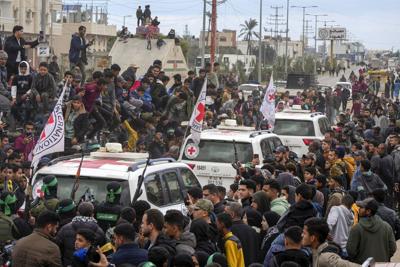
Israel is weighing new restrictions on humanitarian aid to the Gaza Strip after Hamas delayed the return of hostage bodies, a move that could further strain an already desperate humanitarian situation. The decision reflects growing frustration inside the Israeli government as the fragile truce agreement faces its toughest test yet.
According to reports from Reuters and The Guardian, Israel has informed the United Nations that it plans to reduce the number of aid trucks entering Gaza by half—from around 600 per day to roughly 300—and ban the entry of fuel and cooking gas, except for limited humanitarian use. Officials from the Coordinator of Government Activities in the Territories (COGAT) said these measures are a direct response to Hamas’ “violation” of the hostage release agreement.
Under the U.S.-brokered ceasefire deal, Hamas was required to return both living hostages and the remains of those killed. While four bodies have been transferred back to Israel, dozens remain missing. Israeli authorities argue that Hamas is using the delay as leverage in ongoing political negotiations.
In a formal communication to the U.N., Israel stated:
“Hamas violated the agreement regarding the return of hostages’ bodies. As a result, sanctions related to humanitarian aid will be imposed.”
The Rafah border crossing, a key humanitarian gateway between Egypt and Gaza, remains closed, with Israel citing Hamas’ failure to meet the terms of the ceasefire. Hamas, however, blames the delay on the chaos and widespread destruction within Gaza, claiming that locating the bodies has been “extremely difficult” amid the ruins left by months of conflict.
Humanitarian organizations warn that the latest Israeli restrictions could exacerbate Gaza’s already dire conditions. Aid groups say food and medical supplies are running critically low, and further disruptions could lead to famine and the collapse of essential services. Fuel shortages have already forced hospitals to rely on limited generator power, threatening thousands of lives.
The United Nations and international aid agencies are urging Israel to reconsider the cuts, emphasizing that collective punishment violates humanitarian principles. “The flow of aid must not be tied to political negotiations,” one U.N. official said.
Meanwhile, diplomatic pressure is mounting. The United States and Egypt, both key mediators in the ceasefire deal, are pushing for a compromise that ensures the return of all hostages while maintaining uninterrupted humanitarian access.
The situation underscores the fragile balance between political leverage and humanitarian necessity. As the ceasefire hangs in the balance, Gaza’s 2.3 million residents face deepening uncertainty, trapped between Israel’s security concerns and Hamas’ defiance.
If Israel proceeds with these restrictions, analysts warn of a potential humanitarian catastrophe that could ignite renewed regional tension and derail ongoing peace efforts.
Watch video below :