

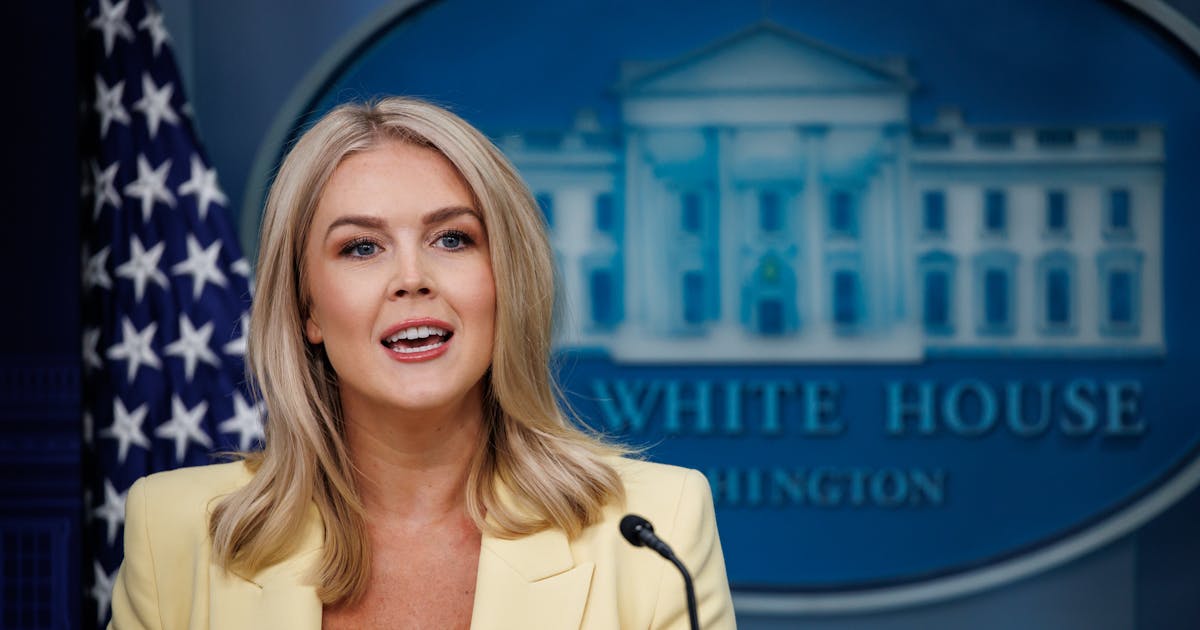
White House Press Secretary Karoline Leavitt faced tough questioning this week when asked whether mass layoffs of federal employees would “still be on the table” if Congress restores government funding. The inquiry underscored the growing anxiety among federal workers and the broader public as the government shutdown continues to ripple through the economy.
The Question That Sparked Debate
During a tense press briefing, reporters pressed Leavitt on the administration’s contingency plans for staffing should lawmakers reach a last-minute deal to reopen the government. The central question: even if funding is restored, will federal agencies still consider layoffs as part of long-term budget adjustments?
Leavitt did not provide a definitive yes or no, instead reiterating the White House’s call for Congress to pass a “clean funding bill” and end what she described as “reckless political brinkmanship.” She emphasized that the administration’s priority remains protecting federal employees and ensuring continuity of essential services.
Federal Workers in Limbo
The question highlights the precarious position of more than two million federal employees nationwide. With the shutdown halting paychecks, forcing furloughs, and closing non-essential offices, workers are facing mounting uncertainty about their financial stability and job security.
Union leaders and advocacy groups have voiced alarm over the prospect of mass layoffs, arguing that such measures would undermine the government’s ability to deliver critical services, from public health programs to national security operations. “Even the suggestion of layoffs adds unnecessary stress to an already strained workforce,” one union official said.
Political Stakes
The exchange with Leavitt reflects broader political tensions surrounding the shutdown. Republicans in Congress continue to push for spending cuts and policy concessions as conditions for restoring funding, while Democrats insist on passing a short-term continuing resolution with no strings attached.
The possibility of layoffs—even in the event of restored funding—has become a political talking point, with some conservative lawmakers arguing that the federal workforce has grown too large and should be trimmed regardless of the shutdown. Democrats counter that cuts would weaken the government’s ability to serve the American people.
Economic Concerns
Economists warn that the longer the shutdown drags on, the more disruptive it will be to the broader economy. Federal workers missing paychecks reduces consumer spending, while small businesses dependent on government contracts are facing cash flow challenges. The uncertainty surrounding potential layoffs only compounds the economic risks.
Financial markets have so far remained relatively stable, but analysts caution that prolonged instability could erode investor confidence. Major ratings agencies have already flagged the political dysfunction in Washington as a potential threat to U.S. creditworthiness.
Looking Ahead
For now, Leavitt’s careful response leaves the question of layoffs unresolved. The White House is focused on pressuring Congress to act quickly to restore funding, but the lack of a clear commitment on job security reflects the reality that long-term budget negotiations may still result in significant staffing changes.
As the political standoff drags on, federal employees remain caught in the crossfire—uncertain not only about when they will be paid, but whether their jobs will still exist once the shutdown is over.
Watch video below :


