

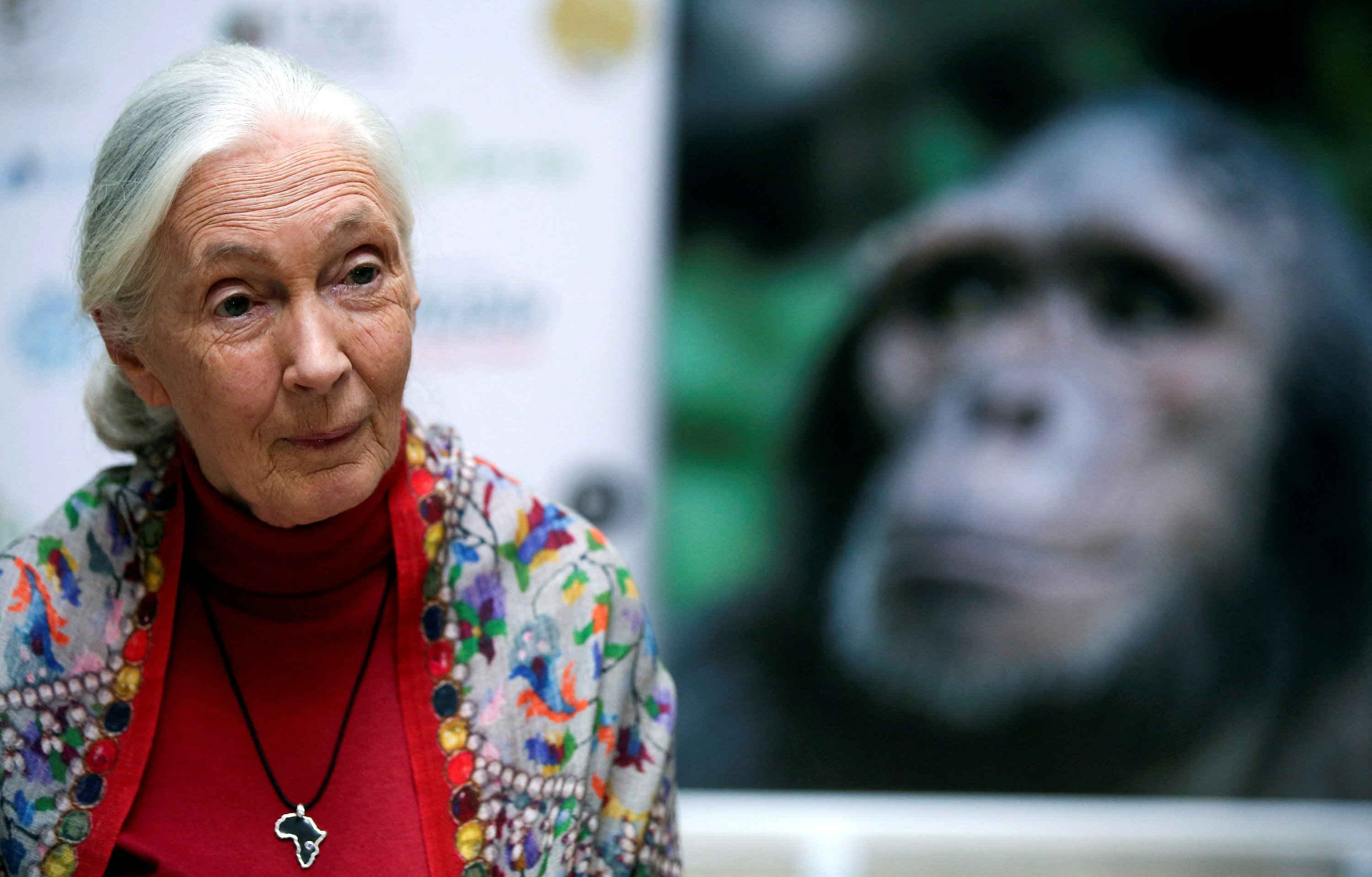
The world is mourning the loss of Jane Goodall, the celebrated English zoologist, primatologist, and conservationist, who has died at the age of 91. Known for her groundbreaking research on chimpanzees in Tanzania, Goodall’s legacy extends far beyond science, shaping global awareness of animal behavior, conservation, and environmental activism.
Goodall rose to international prominence in the 1960s after arriving in Gombe Stream National Park to study wild chimpanzees. At a time when few women were recognized in the field of zoology, and when primatology itself was still developing, her methods and observations were revolutionary. She documented chimpanzees using tools — once considered a uniquely human behavior — and revealed their rich emotional and social lives.
Her findings challenged long-held assumptions about the boundary between humans and animals, reshaping scientific thought and sparking worldwide fascination. “We are not the only beings with minds, emotions, and personalities,” Goodall often said, a perspective that influenced generations of scientists, conservationists, and everyday people.
Over her lifetime, Goodall authored dozens of books, appeared in countless documentaries, and became one of the most recognizable and respected voices for animal welfare. In 1977, she founded the Jane Goodall Institute, a nonprofit organization dedicated to research, conservation, and community-centered development. Later, she launched the Roots & Shoots program, inspiring young people around the world to take action in protecting animals, people, and the environment.
Her tireless advocacy made her not only a scientific pioneer but also a humanitarian and global icon. Goodall was a United Nations Messenger of Peace, recipient of numerous honorary degrees, and winner of countless awards, including the Kyoto Prize, the Benjamin Franklin Medal in Life Science, and the Templeton Prize.
Despite her international fame, Goodall often described herself simply as a “messenger for the chimpanzees” and devoted much of her later life to urging humanity to rethink its relationship with nature. She spoke passionately about climate change, deforestation, and the urgent need for global conservation, traveling extensively well into her 80s to deliver lectures and inspire collective action.
Tributes have poured in from scientists, world leaders, and admirers across the globe. The World Wildlife Fund called her “a pioneer whose discoveries redefined our place in the natural world.” United Nations Secretary-General António Guterres praised her as “a champion of nature whose voice will echo for generations.”
Jane Goodall’s death marks the end of an era in wildlife research and conservation, but her influence endures through the countless individuals and organizations she inspired. From the forests of Tanzania to classrooms and conservation programs worldwide, her vision of a more compassionate and sustainable world lives on.
She is survived by her son, Hugo Eric Louis van Lawick, and thousands of students, scientists, and conservationists who carry forward her mission.
Jane Goodall’s life was a testament to the power of curiosity, empathy, and determination — values that will continue to guide humanity’s efforts to protect the planet and its creatures.
Watch video below :


