
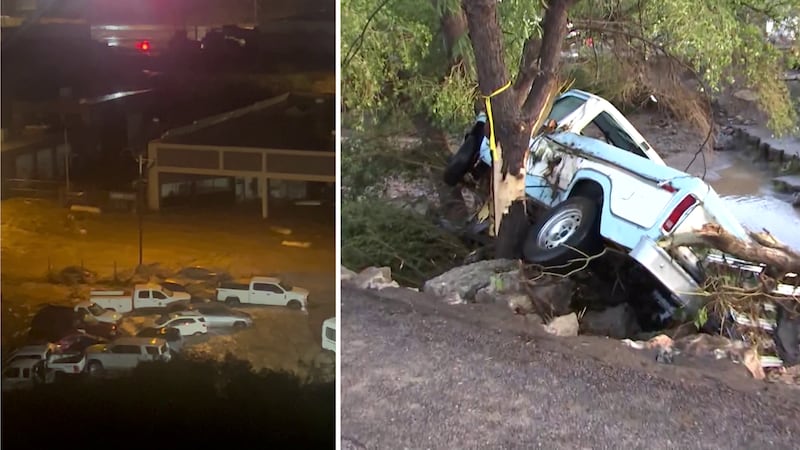
Arizona is grappling with catastrophic flooding after days of relentless rainfall overwhelmed rivers, creeks, and drainage systems across the state. Emergency crews are working around the clock to rescue stranded residents, as officials warn that the crisis is far from over.
Catastrophic Flooding Strikes Arizona
Meteorologists report that the flooding was triggered by a combination of monsoon storms and a stalled weather system, which dumped record-breaking rainfall across multiple counties. Cities including Phoenix, Tucson, and Flagstaff have seen widespread flooding, while rural areas have been cut off entirely by washed-out roads and collapsed bridges.
The National Weather Service (NWS) issued multiple flash flood warnings, urging residents to avoid low-lying areas and evacuate if necessary. Authorities say that water levels in certain regions rose by several feet within hours, catching many communities off guard.
Rescue Efforts Underway
Local fire departments, police units, and the Arizona National Guard have been deployed to assist with rescues. Helicopters have airlifted families from rooftops, while swift-water rescue teams navigate submerged neighborhoods in inflatable boats.
Governor Katie Hobbs declared a state of emergency, allowing federal and state resources to flow more quickly into the hardest-hit areas. “Our priority is saving lives and ensuring that every Arizonan has access to shelter, food, and medical care,” Hobbs said in a press briefing.
Volunteers have also joined the effort, setting up emergency shelters in schools and community centers. Relief organizations are distributing bottled water, blankets, and meals to displaced families.
Communities on Edge
The flooding has left thousands without power and forced hundreds of road closures across the state. In Maricopa County, one of the most heavily impacted areas, authorities estimate that hundreds of homes have sustained severe water damage.
Residents describe scenes of chaos as streets turned into rivers. “We barely made it out with our kids and pets,” said Maria Lopez, a Phoenix resident who was evacuated by boat. “The water came rushing into our home faster than we could pack anything.”
Environmental and Economic Impact
Beyond immediate dangers, experts warn of long-term consequences. Floodwaters have damaged farmland, threatening Arizona’s agriculture industry, while contaminated water supplies raise public health concerns. Cleanup efforts are expected to take months, with damages potentially running into the billions of dollars.
Insurance companies are already bracing for a surge in claims, while local businesses face uncertainty about reopening. Economists caution that the disaster could ripple through the state’s economy, particularly in tourism and retail sectors.
Safety Warnings and Next Steps
Officials continue to urge caution, warning that additional storms may worsen the situation. The NWS has advised residents to avoid driving through flooded roads, a leading cause of flood-related deaths.
Federal Emergency Management Agency (FEMA) teams are expected to arrive soon to coordinate long-term recovery operations. In the meantime, local communities are leaning on resilience and solidarity to weather the crisis.
Conclusion
As rescue efforts intensify, Arizona faces one of its most devastating natural disasters in recent history. With lives disrupted and communities submerged, the coming days will be critical in determining how quickly the state can recover from the catastrophic floods.
Watch video below :
:max_bytes(150000):strip_icc():focal(749x0:751x2)/Karoline-Leavitt-Expecting-Baby-No-2-122625-3ee9c9c5c0004741808a746cca98b9b2.jpg?w=350&resize=350,220&ssl=1 "White House Press Secretary Karoline Leavitt Announces Pregnancy, Expecting Baby Girl")




:max_bytes(150000):strip_icc():focal(749x0:751x2)/Karoline-Leavitt-Expecting-Baby-No-2-122625-3ee9c9c5c0004741808a746cca98b9b2.jpg?w=180&resize=180,130&ssl=1 "White House Press Secretary Karoline Leavitt Announces Pregnancy, Expecting Baby Girl")