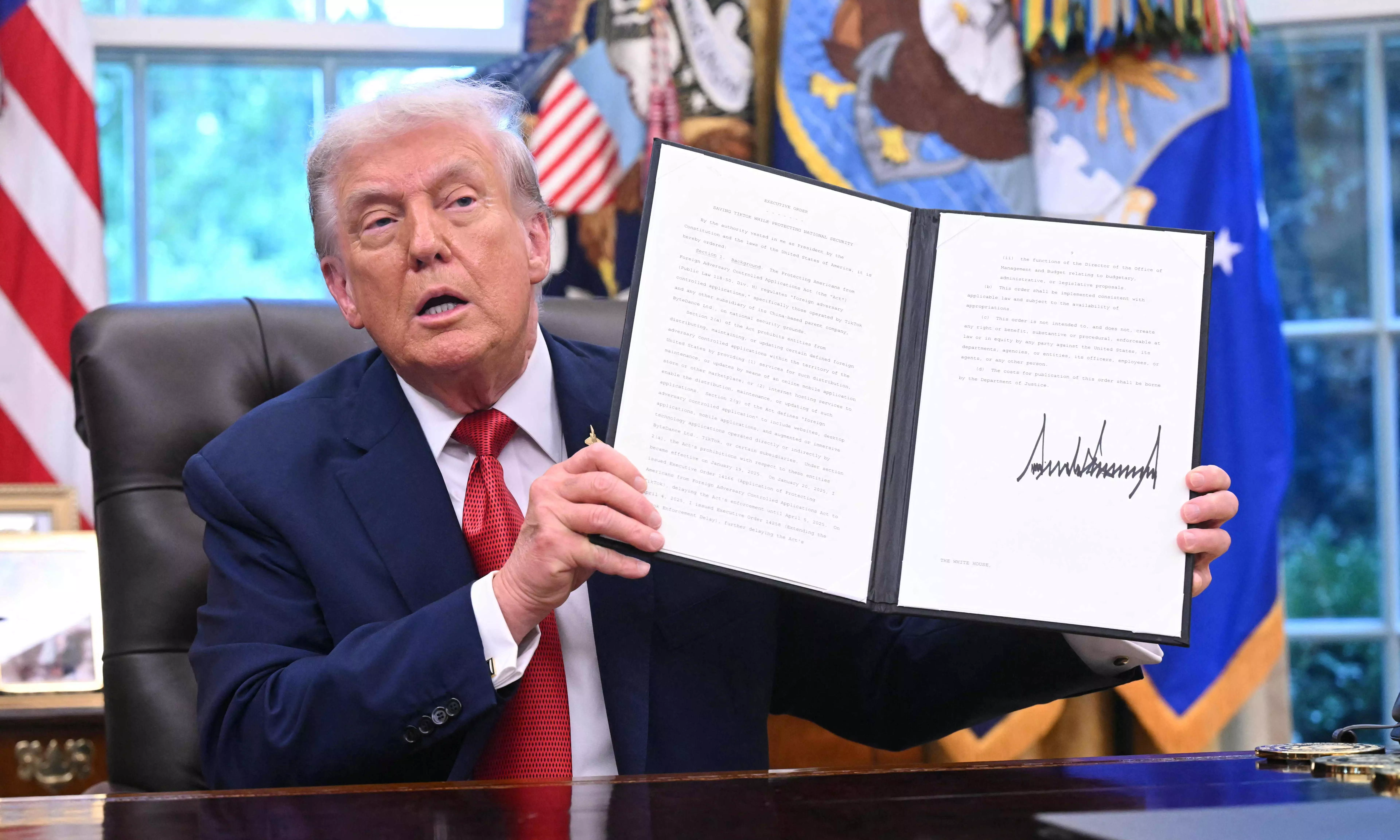
In a decision that could redefine the global social media landscape, President Donald Trump has signed an executive order approving the sale of TikTok’s U.S. operations, valuing the new American-controlled entity at $14 billion. The move marks a milestone in the long-running standoff between Washington and TikTok’s Chinese parent company, ByteDance, over data security and national sovereignty.
The Executive Order and Its Scope
The order confirms that the proposed deal satisfies U.S. national security requirements set forth by prior legislation mandating TikTok’s divestiture. Under its terms, TikTok’s U.S. operations will be separated from ByteDance, creating a newly structured company governed under American oversight. The order also grants a 120-day window for finalizing technical details and securing regulatory approval in both the United States and China.
Investors and Ownership Structure
The acquisition involves a powerful coalition of U.S. and global investors, including Oracle, Silver Lake, Michael Dell, and Rupert Murdoch. Together, these stakeholders are expected to hold a majority stake, while ByteDance will retain less than 20% ownership and limited board influence. Importantly, control of TikTok’s algorithm and data management will shift under U.S. jurisdiction, addressing long-standing concerns about Chinese access to American user information.
Valuation Questions and Concerns
The $14 billion valuation has surprised many analysts. Given TikTok’s explosive popularity and revenue potential, expectations were significantly higher. Industry experts suggest the relatively modest figure may reflect uncertainties over intellectual property rights, the complexities of transferring algorithm control, and the contentious geopolitical backdrop surrounding the deal.
Despite these concerns, the valuation underscores the U.S. government’s determination to strike a balance between safeguarding national security and keeping TikTok accessible to its massive American user base.
Political Context and Reactions
Trump presented the order as a major victory for U.S. sovereignty, emphasizing that Chinese President Xi Jinping “gave us the go-ahead” for the transaction. However, critics in Congress and among policy experts have raised sharp questions about the agreement’s structure, warning that any loopholes could allow ByteDance to maintain indirect influence.
During the announcement, Trump stirred further debate by remarking that he would like TikTok’s algorithm to become “100% MAGA.” While dismissed by aides as rhetoric, the statement immediately fueled concerns about political interference in content moderation and free expression on the platform.
The Road Ahead
The next four months will be critical. Regulators in both Washington and Beijing must approve final terms, while technical teams work on data migration, algorithm audits, and governance safeguards. Should these efforts fail, TikTok could once again face the prospect of a U.S. ban.
For now, the executive order offers a path forward: preserving TikTok for its 170 million American users while reshaping its ownership to align with U.S. strategic and security interests. The deal stands as one of the most significant government interventions in the digital economy, setting a precedent for how the U.S. handles foreign-owned tech platforms in the years ahead.
Watch video below :
:max_bytes(150000):strip_icc():focal(749x0:751x2)/Karoline-Leavitt-Expecting-Baby-No-2-122625-3ee9c9c5c0004741808a746cca98b9b2.jpg?w=350&resize=350,220&ssl=1 "White House Press Secretary Karoline Leavitt Announces Pregnancy, Expecting Baby Girl")





:max_bytes(150000):strip_icc():focal(749x0:751x2)/Karoline-Leavitt-Expecting-Baby-No-2-122625-3ee9c9c5c0004741808a746cca98b9b2.jpg?w=180&resize=180,130&ssl=1 "White House Press Secretary Karoline Leavitt Announces Pregnancy, Expecting Baby Girl")